Every used tote that arrives on our floor faces the same first question: how do we get it clean, and how clean does it need to be? The wrong method wastes money on an easy tote or, far worse, sends a contaminated tote back into service. We have three primary tools, pressure, steam, and caustic, and choosing between them is a discipline, not a guess. Here is how we actually decide.
The Decision Starts With the Last Contents
We do not choose a method by looking at the tote. We choose it by knowing what was inside. The prior contents determine the soil type, and the soil type determines the chemistry that will remove it.
- Water-soluble residues (sugars, salts, water-based products) often surrender to pressure and hot water alone.
- Proteins, starches, and organic films need heat to break down, which points to steam or hot caustic.
- Fats, oils, and greases require alkaline chemistry to saponify, which means caustic.
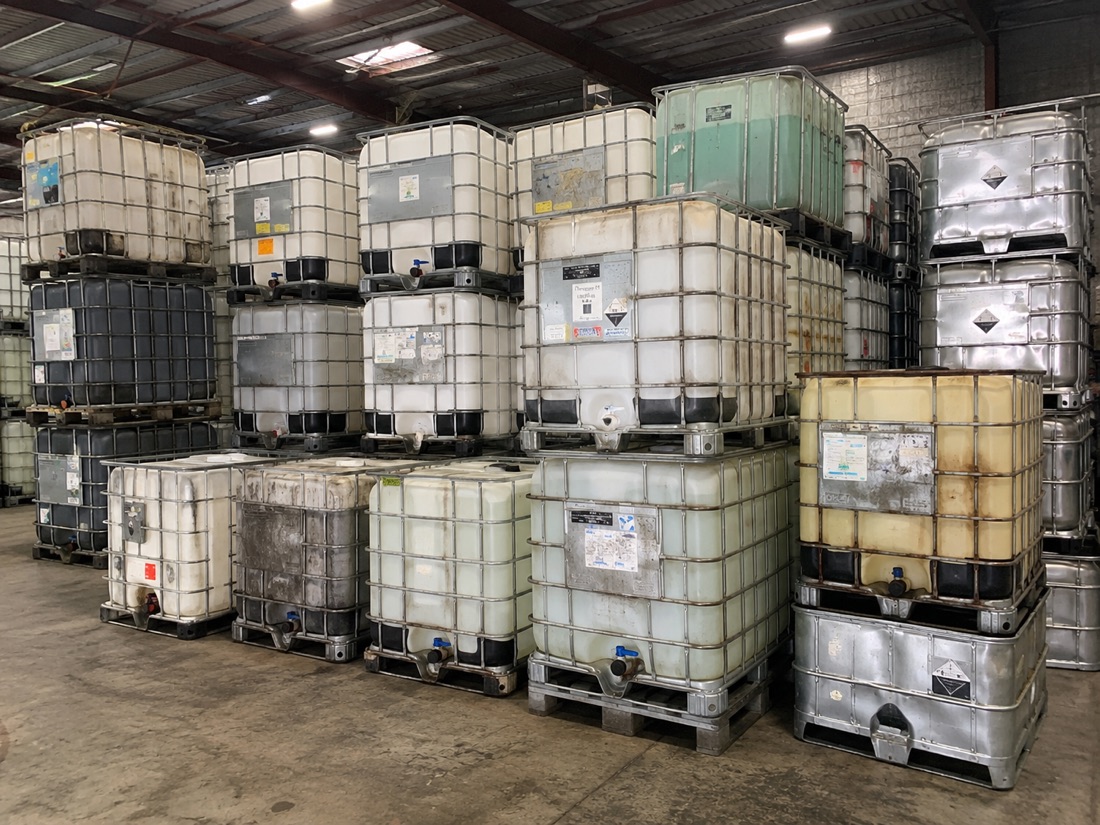
- Cured, polymerized, or heavily bonded residues may resist everything and send the tote to recycling.
Before any wash, we verify history against the label and SDS. That documentation drives both the cleaning method and the final grade, which we explain on our grades page.
Method One: Pressure Washing
A high-pressure hot-water rinse is our lightest, fastest, and cheapest tool. It uses mechanical force plus temperature to blast loose soil off the interior walls.
Best for: food syrups, juices, water-based products, and any tote that arrives already mostly clean.
Strengths: fast turnaround, low chemical use, minimal effluent to treat, gentle on the bottle.
Limits: pressure alone does not dissolve fats or kill the odor of permeated residues. It moves what it can reach; it does not change chemistry.
For a tote that held a benign, rinsable product and comes to us in good shape, a thorough pressure wash is often all it needs to re-enter service.
Method Two: Steam Cleaning
Steam brings heat and moisture without a flood of chemistry. It penetrates residues, loosens bonded films, and provides a sanitizing effect from temperature alone.
Best for: totes needing sanitation for food-adjacent reuse, sticky organic films that soften with heat, and odor reduction.
Strengths: excellent penetration into corners and the bottle shoulders, strong microbial reduction, low chemical footprint.
Limits: slower than pressure, energy-intensive, and still not a substitute for alkaline chemistry on heavy grease.
Heat is a solvent in its own right. A residue that shrugs off cold water often lets go the moment steam softens it.
Method Three: Caustic Wash
A hot circulated caustic (alkaline) wash is our heavy artillery. Sodium hydroxide chemistry saponifies fats, digests proteins, and strips films that pressure and steam cannot touch. This is what turns a greasy industrial tote back into a usable container.
Best for: edible oils and fats, greasy industrial products, stubborn organic soils, and any tote returning to demanding service.
Strengths: dissolves what mechanical methods only push around, delivers the deepest clean, restores totes others would scrap.
Limits: hazardous to handle, generates regulated effluent, requires a full neutralizing rinse, and is overkill for a simple syrup tote. Caustic is powerful precisely because it is aggressive, so we reserve it for jobs that need it.
Putting It Together: Our Selection Matrix
| Last contents | Primary method | Add-on |
|---|---|---|
| Sugar syrup, juice | Pressure wash | Sanitize if food-grade |
| Water-based cleaners | Pressure wash | Extra rinse |
| Food oils, fats | Caustic wash | Neutralize + rinse |
| Sticky organic films | Steam | Follow with caustic if needed |
| Food-grade re-entry | Steam or caustic | Sanitize + verify |
| Solvents, cured resin | Often none | Route to recycling |
The matrix is a starting point, not a rulebook. Many totes get a combination: a pressure pre-rinse to remove bulk soil, then caustic to break chemistry, then a steam or high-heat sanitize to finish. The sequence is chosen tote by tote.
Verification: The Step That Actually Matters
A cleaning method is only as good as its verification. After any wash we inspect the interior visually, check for odor, and for food-grade re-entry we swab and test. A tote is not clean because a machine ran; it is clean because we confirmed it. Totes that pass become our reconditioned inventory; totes that cannot be cleaned to spec are honestly downgraded or sent to our recycling service.
Why This Matters to You as a Buyer
When you buy a reconditioned tote, you are trusting that someone matched the cleaning method to the history and verified the result. That is the invisible work behind a clean tote, and it is why a professionally reconditioned unit is worth more than a garden-hose rinse from an online marketplace. If you have a specific fill in mind, tell us through contact and we will make sure the tote you receive was cleaned to meet it, not just cleaned enough to look the part.