IBC Tote Safety & Compliance
An IBC tote is safe and reliable when it's matched to the right product, inspected before reuse, and handled within its ratings. This guide walks through UN/DOT markings, chemical compatibility, grounding, stacking, inspection, and the things you should never store in a used tote.
Get Your Free Quote
Buying, selling, or just curious what your totes are worth? Tell us what you need — we reply within one business day.
How to read a UN / DOT marking
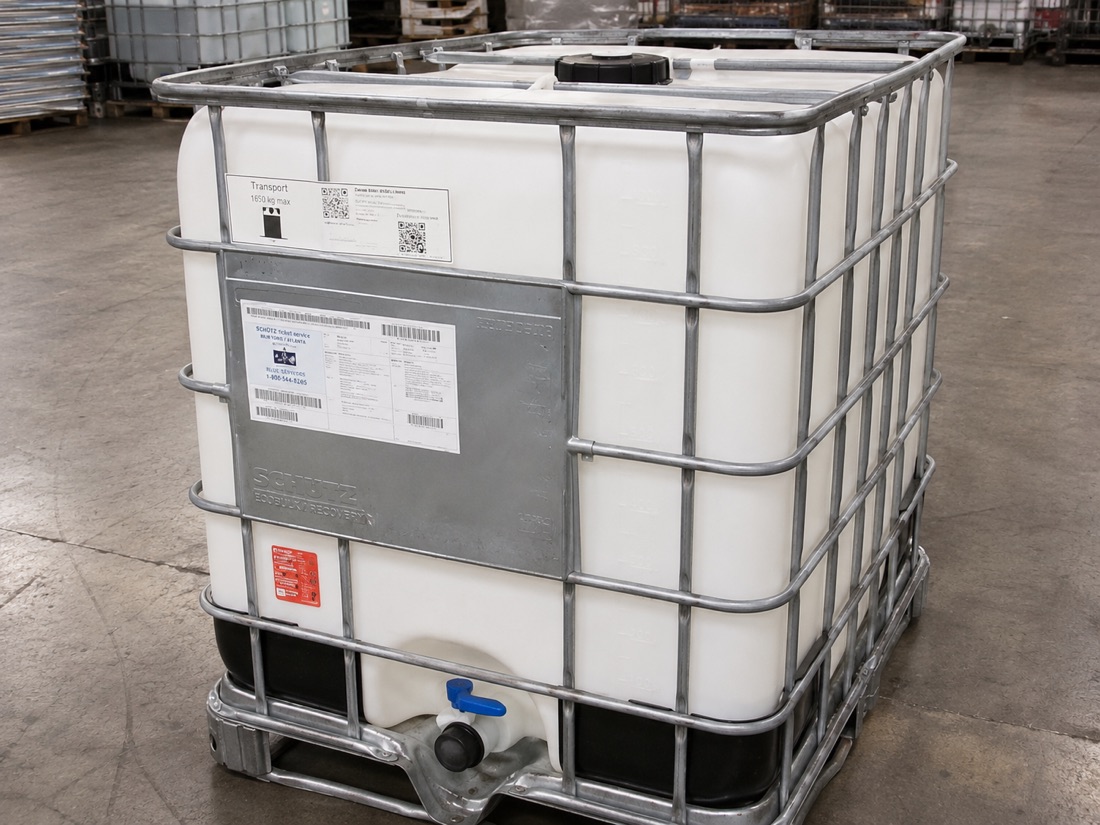
If you ship regulated liquids, the stamped UN code on the tote is the single most important thing to understand. It certifies the container type and the hazard class it's approved to carry. A typical marking looks like UN 31HA1/Y/…. Here's what the pieces mean:
| Segment | Meaning |
|---|---|
| UN | United Nations certified packaging |
| 31 | Rigid IBC intended for liquids (11 = solids) |
| H | Body material: H = rigid plastic (A = steel) |
| A | Composite with structural equipment (the steel cage) |
| 1 | Design/category number for the IBC type |
| Y | Packing group rating: Y covers PG II & III (X = I, II, III; Z = III only) |
Additional fields encode the year of manufacture, country of approval, maximum specific gravity, and test pressure. If you're moving hazardous materials, match the marking to your product's hazard class and packing group, and confirm the tote is within its retest date.
The essentials, one card at a time
Chemical compatibility
HDPE handles most acids, bases, salts, and water-based solutions beautifully, and it's food-safe-capable. Its weak spots are aromatic and chlorinated solvents, strong oxidizers, and some concentrated acids, which can swell, stress-crack, or permeate the bottle. Always check a compatibility chart for your specific product and concentration before filling.
Static & grounding
Transferring flammable or combustible liquids generates static. Plastic totes can hold a charge, so bond and ground the tote, the pump, and receiving equipment before transfer, and control flow rate to limit static build-up. Never fill a flammable-rated tote near ignition sources.
Stacking limits
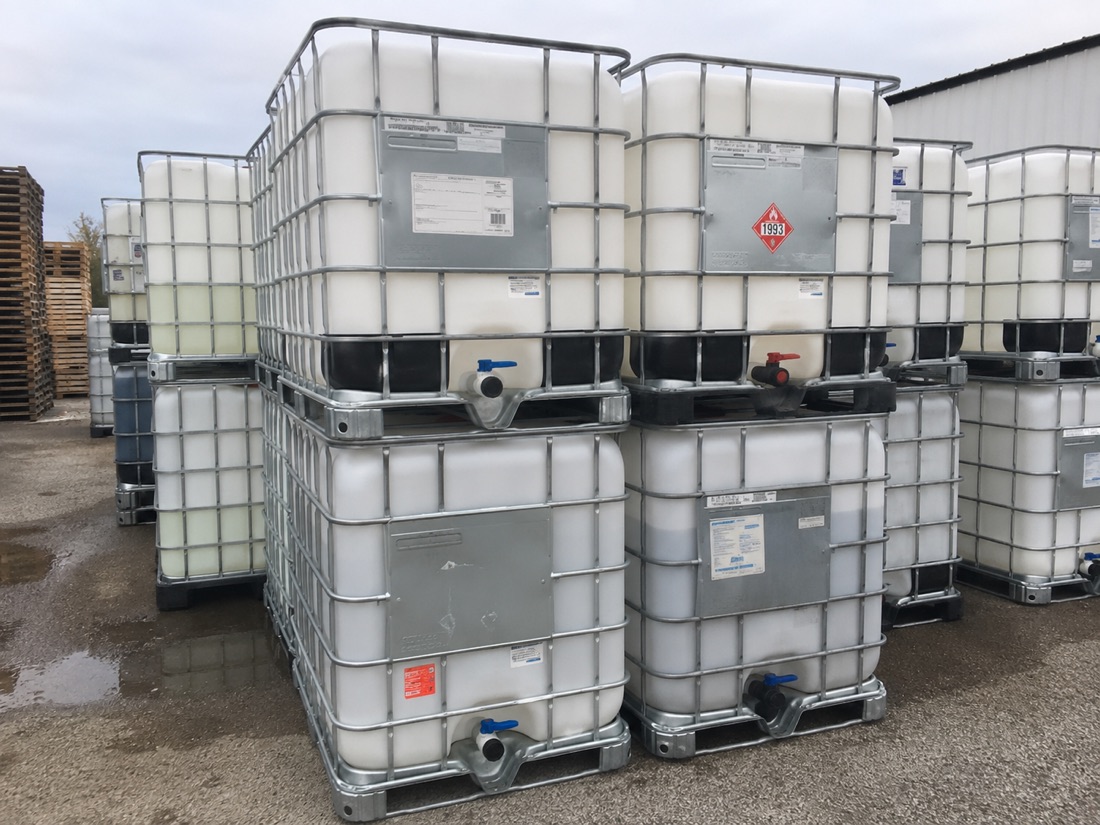
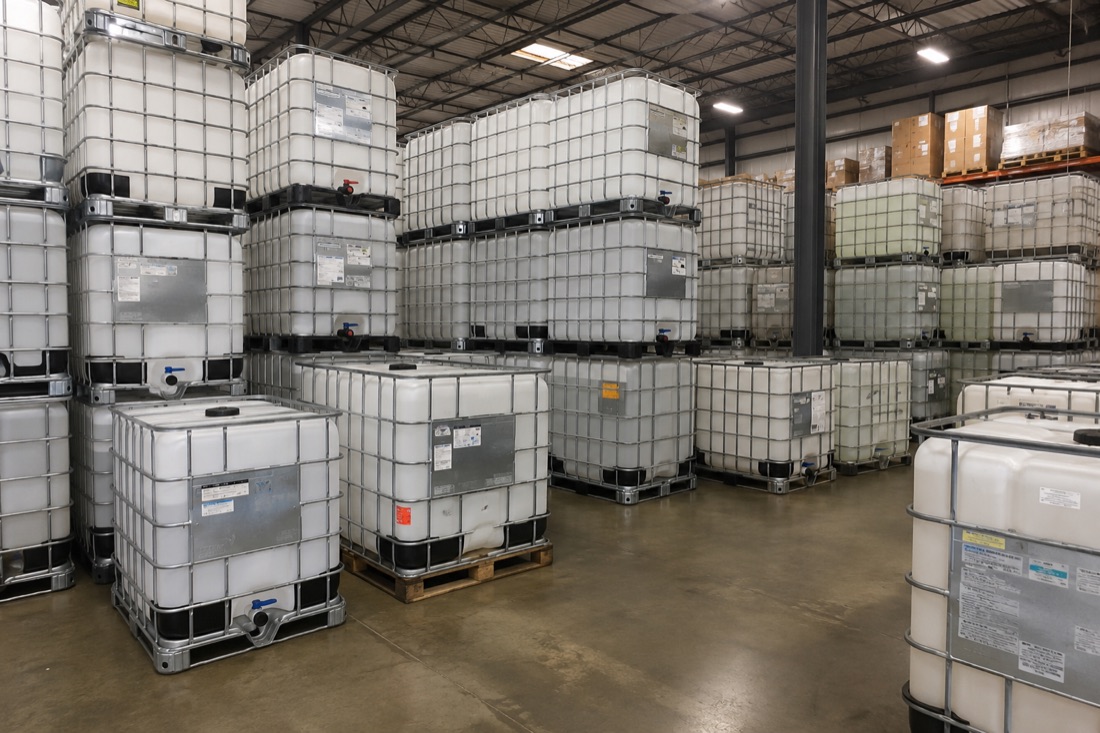
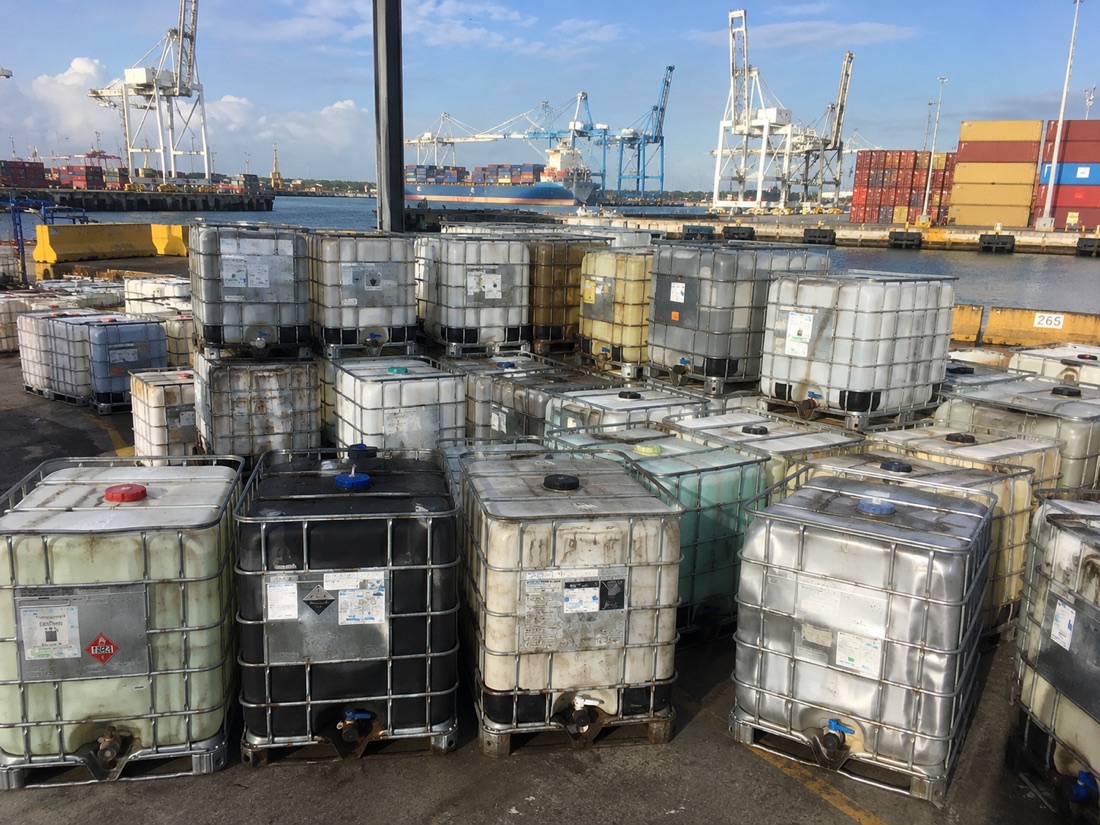
The steel cage lets you stack, but within limits. As a rule, stack loaded composite totes no more than two high, and only on sound, undamaged cages on level ground. Never stack on a bent, rusted, or cracked cage — the plastic bottle can't carry that load on its own.
Inspection before reuse
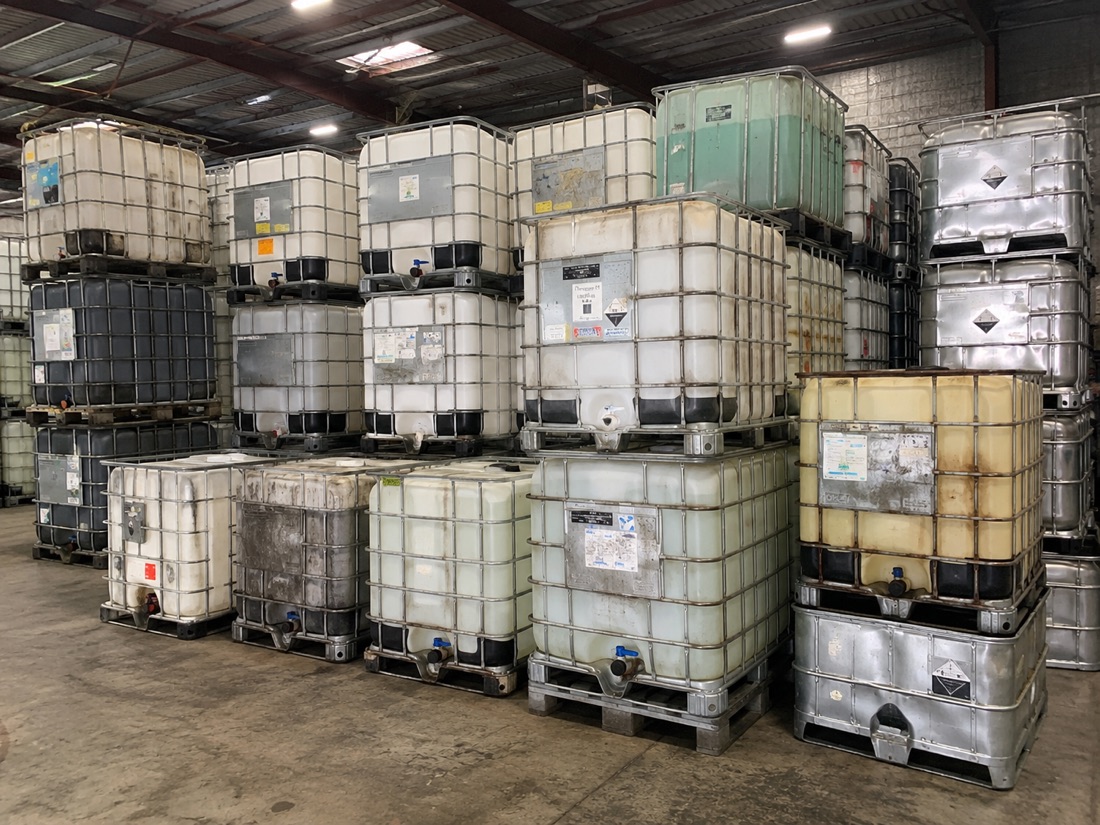
Before every reuse, walk the tote: cage welds and tubes for cracks or heavy rust, the bottle for bulges, gouges, or crazing, the valve and gasket for leaks, the cap for a proper seal, and the pallet for damage. When in doubt, don't fill it. A five-minute check prevents a 2,400-lb spill.
UV & temperature
Long, direct sun degrades unstabilized HDPE over time and can promote algae growth in translucent bottles. Store totes shaded or covered for outdoor duty, and keep contents within HDPE's comfortable range — roughly up to ~120°F for extended storage. For hot or light-sensitive products, use black/UV-stabilized bottles.
Food-safe handling
Food or potable use requires a genuine food-grade tote — one that held only food-safe products and was cleaned and certified. Verify prior contents in writing, keep food totes off wood pallets, and don't cross-use a tote between food and non-food service. See our grades guide.
Do & don't
✔ Do
- Read the UN/DOT marking before shipping any regulated liquid
- Confirm prior contents and HDPE compatibility for your product
- Ground and bond totes when transferring flammable liquids
- Inspect cage welds, bottle, valve, and gasket before every reuse
- Respect stacking limits — do not stack loaded totes more than two high
- Store out of direct sun and off bare ground to protect the pallet
- Vent the cap when filling or emptying to prevent bottle collapse
✕ Don't
- Store flammable solvents or fuels not rated for the tote's UN marking
- Put food or potable water in a tote with unknown or non-food history
- Store strong oxidizers, concentrated acids, or aggressive solvents in HDPE
- Stack totes on a cracked, rusted, or bent cage
- Fill a tote past its rated capacity or gross weight
- Leave a tote of expanding/off-gassing product sealed and unvented
- Assume a washed tote is food-grade without documented history
Products that don't belong in a used HDPE tote
Even a spotless Grade A tote is the wrong home for certain products. Avoid storing these in a standard composite IBC unless you have a tote specifically rated and compatible for them:
- Gasoline and volatile fuels (use fuel-rated, grounded systems)
- Aromatic/chlorinated solvents that attack HDPE
- Strong oxidizers and concentrated nitric/sulfuric acids
- Anything requiring pressurization — IBCs are not pressure vessels
- Food or drinking water in a non-food-grade tote
- Hot liquids above HDPE's safe temperature range
Note: This page is general educational information, not legal, regulatory, or engineering advice. Requirements vary by product, jurisdiction, and application. Always consult the current DOT/PHMSA and OSHA regulations, your product's Safety Data Sheet, and a qualified professional before storing or transporting regulated materials.
HDPE chemical compatibility, in plain terms
High-density polyethylene is the reason composite totes are so useful — and knowing its limits is the difference between years of safe service and a stress-cracked bottle. HDPE is chemically inert against a huge range of products, but a handful of chemical families attack it. Here is the practical map:
| Category | Examples | HDPE verdict |
|---|---|---|
| Water & aqueous solutions | Potable water, brines, most salt solutions | Excellent |
| Dilute acids & bases | Diluted sulfuric, hydrochloric, sodium hydroxide | Generally good — check concentration |
| Detergents & cleaners | Surfactants, soaps, most cleaning concentrates | Good |
| Food-safe liquids | Syrups, edible oils, vinegar, juice concentrate | Good (food-grade tote required) |
| Aromatic/chlorinated solvents | Toluene, xylene, trichloroethylene | Poor — can swell & permeate |
| Strong oxidizers | Concentrated nitric acid, strong bleach at high strength | Poor — can embrittle & crack |
| Volatile fuels | Gasoline, some solvents | Special rating & grounding required |
This is a general guide, not a substitute for a compatibility chart and your product's Safety Data Sheet. Concentration, temperature, and exposure time all change the answer. When in doubt, ask before you fill.
A simple screen: water-based and food-safe products are almost always fine. Anything with the words "solvent," "oxidizer," or "concentrated acid" on the label deserves a compatibility check first.
The pre-fill inspection checklist
Five minutes here prevents a 2,400-lb spill. Walk every used tote through these checks before it holds a drop of product — and never fill one that fails.
The bottle
- No bulges, gouges, or deep scratches
- No crazing (fine surface cracking) or star-cracks near the base
- No cloudiness or brittleness from UV or chemical attack
- Molded date confirms real age, not just a fresh-looking cage
The cage & base
- Cage welds intact — no cracked or separated joints
- Tubes straight, not bent, buckled, or heavily rusted
- Pallet base sound — no splintered wood or broken plastic
- Four-way forklift access clear and undamaged
The fittings
- Valve opens, closes, and seals with no drips
- Outlet gasket present and pliable, not cracked
- Fill cap present, correct size, and vented
- Threads clean and undamaged for a proper seal
The paperwork
- Prior contents disclosed — critical for food/potable
- UN/DOT marking legible and within retest date (if shipping hazmat)
- Grade matches your intended use
- Product compatible with HDPE at your concentration
Need a fresh valve, gasket, or cap? Parts & accessories stock the cheap fixes.
Safe handling, lifting & transport
A full tote is a heavy, tall, top-loaded object — respect it like one. The cage makes totes forklift- and jack-friendly, but the physics still apply.
Lifting & forklift moves
Use the four-way pallet access and center the forks. A full 275 is about 2,400 lbs and a 330 about 2,900 — well within a standard forklift, but the high center of gravity means slow, square turns and no sudden stops. Never lift a loaded tote by the cage alone.
Securing loads on a truck
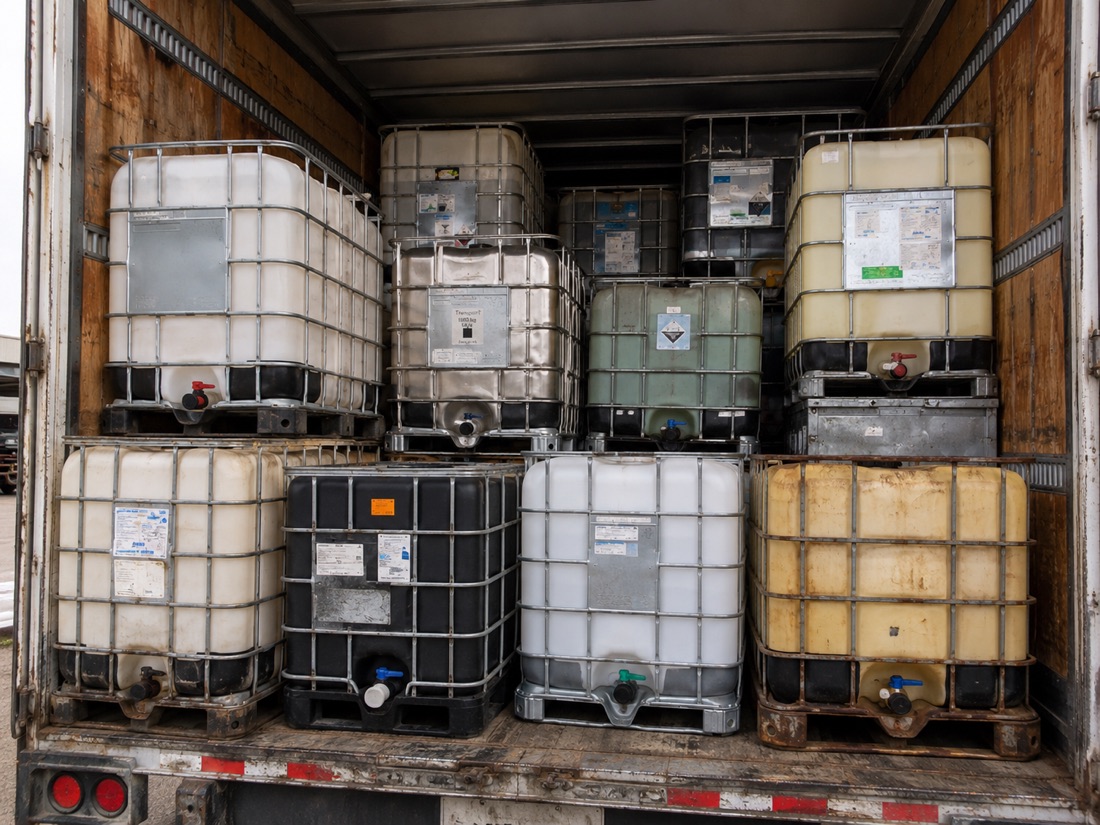
Strap totes against the cage frame, block them so they can't shift, and don't exceed two loaded totes high in transit on sound cages. For regulated liquids, the UN/DOT marking, packing group, and retest date all have to line up before the tote rolls. We handle compliant freight both directions through transportation.
Venting when filling and emptying
Always open the cap vent when draining so the bottle doesn't collapse under vacuum, and when filling so displaced air can escape. A sealed, unvented bottle deforming under pressure or vacuum is one of the most common — and most preventable — tote failures.
If a tote leaks or fails
Even with good practice, valves drip and bottles occasionally fail. Have a plan before you need one:
- Contain first. Keep spill berms, absorbent, or a drip tray under totes holding anything but plain water.
- Isolate the source. Close the valve, upright the tote, and stop the flow before cleanup.
- Consult the SDS. Your product's Safety Data Sheet dictates PPE, cleanup method, and disposal — follow it.
- Don't drain to the ground or a storm drain. Capture residue for proper handling, exactly as reconditioners do at intake.
- Retire the tote correctly. A failed bottle isn't trash — the cage, base, and parts can be repurposed or recovered.
Safety & compliance FAQ
Can I store gasoline or diesel in an IBC tote?
Only in a tote specifically rated and grounded for that fuel, and in line with local fire codes. Volatile fuels generate static and demand bonding, grounding, and the correct UN rating. Farm diesel is sometimes stored in compatible, properly set-up totes — gasoline is far more hazardous and usually belongs in a purpose-built system. Always confirm against your SDS and local regulations.
What does the "Y" in a UN marking mean?
The letter after the material codes is the packing group rating. X covers packing groups I, II, and III; Y covers II and III; Z covers III only. Match it to your product's hazard class and packing group before shipping. The full marking is decoded in the table above.
How high can I stack IBC totes?
As a general rule, stack loaded composite totes no more than two high, and only on sound, undamaged cages on level ground. Empty totes can often go higher, but never stack anything on a bent, rusted, or cracked cage — the plastic bottle cannot carry that load alone.
Do I need to ground a tote for every liquid?
No — grounding and bonding matter specifically for flammable and combustible liquids, where static discharge is an ignition risk. For water, most water-based chemicals, and food products it isn't required. When flammability is on the SDS, bond and ground the tote, pump, and receiving equipment and control the flow rate.
Is a UN/DOT rating required for storage, or just transport?
The UN/DOT marking and its retest date govern transport of regulated hazardous liquids. Stationary storage of non-regulated products doesn't require the rating, though the tote still has to be compatible and inspected. If you'll ship regulated liquids, confirm the marking and retest date before you fill.
How hot can an IBC tote get before it's a problem?
HDPE stays comfortable up to roughly ~120°F for extended storage; higher temperatures soften the bottle and shorten its life. Hot liquids and sun-baked yards both push toward that limit. For hot or light-sensitive products, use black/UV-stabilized bottles and keep totes shaded.
Need a UN/DOT-rated tote?
Tell us your product and hazard class and we'll match you to a compliant, inspected tote — with the paperwork to prove it.