EcoIBC USA
Sustainability

Reuse is the highest form of recycling.

Building a brand-new composite IBC burns virgin plastic, steel, and a lot of energy. Reconditioning one that already exists skips almost all of it — using on the order of 90% less energy. This page shows the reasoning, the numbers, and the assumptions behind them, without the greenwash.

Request a Quote

Get Your Free Quote

Buying, selling, or just curious what your totes are worth? Tell us what you need — we reply within one business day.

US/Canada format, e.g. (512) 555-0123
US ZIP (78744) or Canadian postal (M5V 2T6)
No spam. Email only — we don't even have a phone.
The Impact Ledger

What keeping totes in the loop actually saves.

Cumulative program estimates, calculated from an average tote weight of roughly 100 lbs of HDPE and steel. Every figure below traces back to the methodology further down this page — we'd rather show our work than impress you with a round number.

~90%
Less energy vs. new composite IBC
9M lbs
HDPE & steel diverted from landfill
180K+
Totes kept in circulation
100lbs
Material recovered per reused tote

Want your own numbers? Run the live Eco Calculator — enter your tote count and watch the plastic, steel, water, and CO2e add up.

The Core Idea

Linear takes. Circular keeps.

The linear economy runs in a straight line: extract raw material, make a product, use it once, throw it away. For a container engineered to survive thousands of cycles, that line is almost absurd — it treats a decade-long asset as a disposable cup.

The circular economy bends that line into a loop. A tote is recovered, inspected, washed, and put back into service. When it finally can't be reused, its HDPE is recycled into feedstock rather than buried. Value and material stay in the system instead of leaking out the end.

Our entire operation — buying, reconditioning, hauling, and recycling — is just the machinery required to keep that loop turning. The tote is the same object; the difference is whether it gets a first life or a fifth.

Linear vs. circular, side by side

StageLinear (single-use)Circular (reuse)
MaterialVirgin HDPE + new steelAlready made, kept in service
EnergyFull manufacturing burn~90% less (wash & test)
End of first useLandfillRecovered & regraded
End of lifeBuriedHDPE recycled to flake
Cost to youHighestUp to ~60% lower
Embodied Carbon & Energy

The carbon is spent before the tote is ever filled.

Most of a new IBC's environmental cost is "embodied" — locked in during the making of it, long before it holds a single gallon.

Making a new one

Virgin material

A new composite IBC needs roughly 40–60 lbs of virgin high-density polyethylene blow-molded into the bottle, plus a welded steel cage and a pallet base. HDPE is a petroleum product — its feedstock and its processing energy are both fossil-intensive.

Reconditioning

Wash, test, ship

Reconditioning replaces almost all of that with hot water, detergent, a pressure test, and — when needed — a new bottle inside the existing cage. No blow-molding, no new steel, no new pallet. That's where the order-of-90%-less-energy figure comes from.

Net effect

Carbon avoided, not created

Choosing a reconditioned tote doesn't just add a small footprint — it avoids the far larger footprint of manufacturing a replacement. The greenest tote is almost always the one that already exists.

A necessary nuance: the exact energy saving depends on the tote, the grade of reconditioning, and how far it's hauled. Freight matters — a tote trucked across three states is not carbon-free. We account for transport honestly and never claim reuse is a zero-impact activity. It is a dramatically lower-impact one.

The Waste Hierarchy, Applied

Reduce, reuse, recycle — in that order, for totes.

The three R's are ranked, not equal. Recycling gets the spotlight, but it sits at the bottom of the hierarchy for a reason. Here's how each rung maps onto an IBC tote.

1

Reduce

Buy the right size once. Choosing the correct tote capacity for your volume means fewer containers, fewer fills, and fewer shipments — the cheapest gallon to move is the one you never had to.

2

Reuse

Recondition and re-deploy. This is where we live: washing, testing, and re-bottling so a tote serves many lives before it's ever considered scrap. Reuse preserves the embodied energy that recycling can't.

3

Recycle

Only when reuse is exhausted. A cracked or contaminated bottle becomes HDPE flake and the steel cage is scrapped for melt — recovering material, though not the embodied energy of the original form.

See our recycling & reconditioning →
By The Numbers

Why the waste stream is the whole point.

~100 lbs

Plastic & steel diverted per reused tote

A single landfilled composite IBC represents roughly 100 lbs of HDPE and galvanized steel that will sit inert for centuries. Multiply that across a truckload and the numbers stop being abstract.

Thousands

Of gallons of water an IBC can store & move

Reused totes are the backbone of rainwater harvesting, farm irrigation, and emergency water storage. Keeping totes cheap and available directly enables more water reuse downstream — an environmental win that compounds.

And the water saved isn't only in the tote. Manufacturing virgin plastic is itself water-intensive; every tote you reuse avoids the process water a new one would have demanded.

Our Methodology

How we calculate the impact numbers.

Credible claims need a stated method. Here is exactly how the figures on this site — and inside the Eco Calculator — are derived, along with the assumptions we make and their limits.

The reference tote

We model a typical reconditioned composite IBC at roughly 100 lbs of recoverable material: on the order of 40–60 lbs of HDPE in the bottle plus a galvanized steel cage and pallet base making up the balance. Real totes vary by size and manufacturer; a 275-gallon unit is lighter than a 550-gallon one, so we use a conservative average rather than a best case.

The energy comparison

The "~90% less energy" framing compares the energy to wash, pressure-test, and (where needed) re-bottle an existing tote against the energy to blow-mold a new HDPE bottle and fabricate a new steel cage and pallet from scratch. This is an order-of-magnitude estimate consistent with published reuse-versus-new analyses for rigid HDPE containers. It is directional, not a certified LCA.

Diversion totals

Cumulative "lbs diverted" figures multiply the number of totes we've kept in circulation by the reference weight. They represent material that avoided landfill by being reused or recycled — not a claim that zero grams ever escape the loop.

What we deliberately don't do

  • We don't ignore freight — hauling has a real carbon cost we account for.
  • We don't claim reuse is zero-impact; it is lower-impact.
  • We don't use best-case weights to inflate totals; we use conservative averages.
  • We don't sell offsets or certificates — just totes that would otherwise be waste.

If a number here matters to your own reporting, tell us and we'll walk you through the specific assumptions for your totes, grades, and lanes.
End Of Life

When a tote can't be reused, it still doesn't get buried.

Not every tote can be reconditioned forever. A bottle that's cracked, UV-degraded, or held a product that can't be cleaned to spec reaches the end of its reuse life. At that point the circular loop still has one more turn: recycling.

The HDPE bottle is separated from the steel cage, shredded, and processed into recycled flake or pellet that manufacturers can buy back into new products. The galvanized steel cage is scrapped for melt. What's left headed for landfill is a small fraction of the original tote — and closing that last gap is the target of our zero-landfill goal.

Make It Count

Don't take our word for it. Do the math.

The most honest sales pitch we have is arithmetic. Enter how many totes you're reusing and watch the plastic, steel, water, and CO2e you're saving add up live, right on the page.

Open the Eco Calculator
Life-Cycle View

Where the impact actually lands, stage by stage.

A simplified life-cycle comparison of a single composite IBC on two paths: made new and used once, versus recovered and reconditioned. Directional, not a certified LCA — the assumptions are stated in the methodology above.

Life-cycle stageNew & single-useReconditioned & reusedDominant impact driver
Raw material40–60 lbs virgin HDPE + new steelNone — material already existsFossil feedstock, mining
ManufactureBlow-mold bottle, weld & galvanize cageSkipped entirelyProcess energy
ReconditioningN/AHot wash, pressure test, re-bottle if neededWater & heating energy
TransportFactory → filler → userRecovery route → userFreight miles & load factor
Use phaseOne fillMany fills over yearsCycles per tote
End of lifeLandfill (~100 lbs buried)Reused again, then HDPE recycledDiversion vs. burial

Freight is the one stage where reuse can lose ground on a very long lane — which is why we plan consolidated, regional recovery routes rather than one-off cross-country hauls where we can.

Per-Tote Resource Ledger

What one reused tote saves, and where the number comes from.

ResourceApprox. saved per reused toteWhy
Virgin HDPE plastic~40–60 lbsNo new bottle is blow-molded
Steel & pallet base~40–60 lbsExisting cage and base stay in service
Manufacturing energy~90% vs. newWash/test replaces molding & fabrication
Process waterMeaningful, indirectVirgin plastic production is water-intensive
Landfill volume~51 cu ft avoidedThe tote isn't buried at end of first use

These are conservative, per-tote figures — the same reference values that power the Eco Calculator. Multiply them by your own tote count to see program-scale impact. We deliberately use average, not best-case, weights so the totals hold up.

Circularity In Practice

A loop only closes if someone recovers the tote.

The circular economy sounds tidy on a diagram, but in the real world the hardest link isn't the washing or the reselling — it's recovery. You cannot reuse a tote you never got back. Most single-use waste happens not because a tote couldn't be reused, but because nobody was there to collect it before it hit the dumpster.

That's why our recovery routes and cash-for-empties program are as central to sustainability as the wash line. Every scheduled pickup is a tote pulled back into the loop instead of leaking out the end of it — the difference between a good intention and a closed circle.

The five turns of the loop

  1. Recover — pay for and collect empties on scheduled routes.
  2. Wash & test — clean and verify integrity.
  3. Regrade — honest grade, food-grade certified separately.
  4. Redeploy — sell back into service, many times over.
  5. Recycle — only when reuse is genuinely exhausted.
Where We're Headed

Goals we'll report against, not just aspire to.

We're not at a perfect zero, and we'd rather name the gaps than paper over them. Here's what we're actively working toward.

1

Close the last landfill gap

Route every end-of-life tote to HDPE recycling and steel scrap so the fraction that reaches landfill keeps shrinking toward zero. This is the target behind our zero-landfill goal.

2

Shorten recovery lanes

Consolidate and regionalize pickup routes so reused totes travel fewer freight miles — protecting the one life-cycle stage where reuse can lose ground on very long hauls.

3

Publish, don't posture

Keep our methodology open and the calculator live, so every impact claim traces to a stated assumption. Transparency is a standing goal, not a one-time report.

Sustainability FAQ

The honest-answers section.

Is reusing a tote really greener than buying new?
In almost every case, yes. Most of a new tote's environmental cost is embodied in manufacturing — virgin HDPE, new steel, and process energy. Reuse avoids nearly all of it, on the order of 90% less energy. The main exception is a reused tote hauled an extreme distance, which is why we plan freight honestly.
Where does the "~90% less energy" figure come from?
It compares the energy to wash, pressure-test, and (where needed) re-bottle an existing tote against blow-molding a new HDPE bottle and fabricating a new steel cage and pallet. It's an order-of-magnitude estimate consistent with published reuse-vs-new analyses for rigid HDPE containers — directional, not a certified LCA. Full detail is in the methodology above.
Do you count the carbon of shipping?
Yes. Freight has a real carbon cost and we never pretend reuse is zero-impact. We account for hauling and work to keep recovery routes regional and consolidated to minimize it.
What happens to a tote that can't be reused anymore?
The HDPE bottle is separated from the steel cage, shredded, and processed into recycled flake; the galvanized cage is scrapped for melt. Only a small fraction heads to landfill — and closing that gap is an active goal. See recycling & reconditioning.
Do you sell carbon offsets or certificates?
No. We don't sell offsets or eco-certificates — just totes that would otherwise have become waste. The impact is in the reuse itself, not in a paper credit.
Reduce · Reuse · Recycle

Choose the tote that already exists.

Buy reconditioned, sell your empties for reuse, or recycle what's finally spent. Every path keeps material in the loop and out of the ground.

Contact Us
Straight From the Yard

Real totes. A real loop. 7000 Burleson Rd.

A look inside our Austin operation — buying, grading, reconditioning, and loading IBC totes for reuse across all 50 states.

The Yard
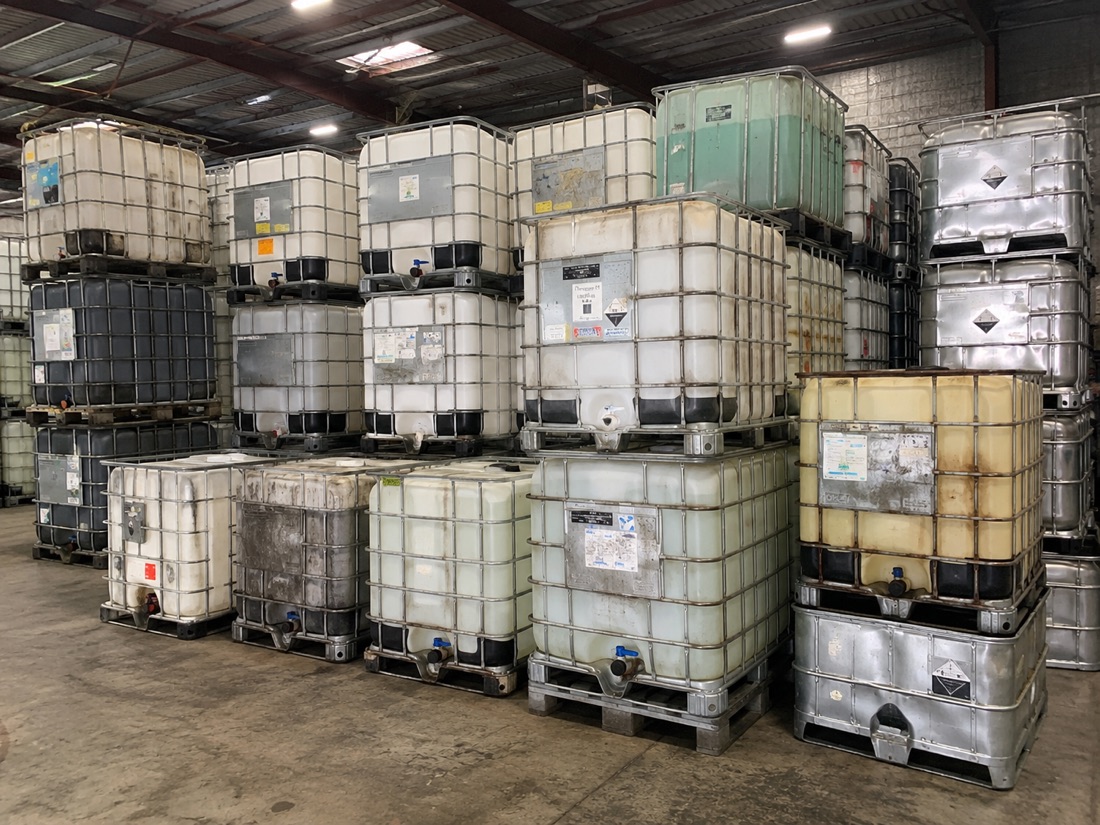
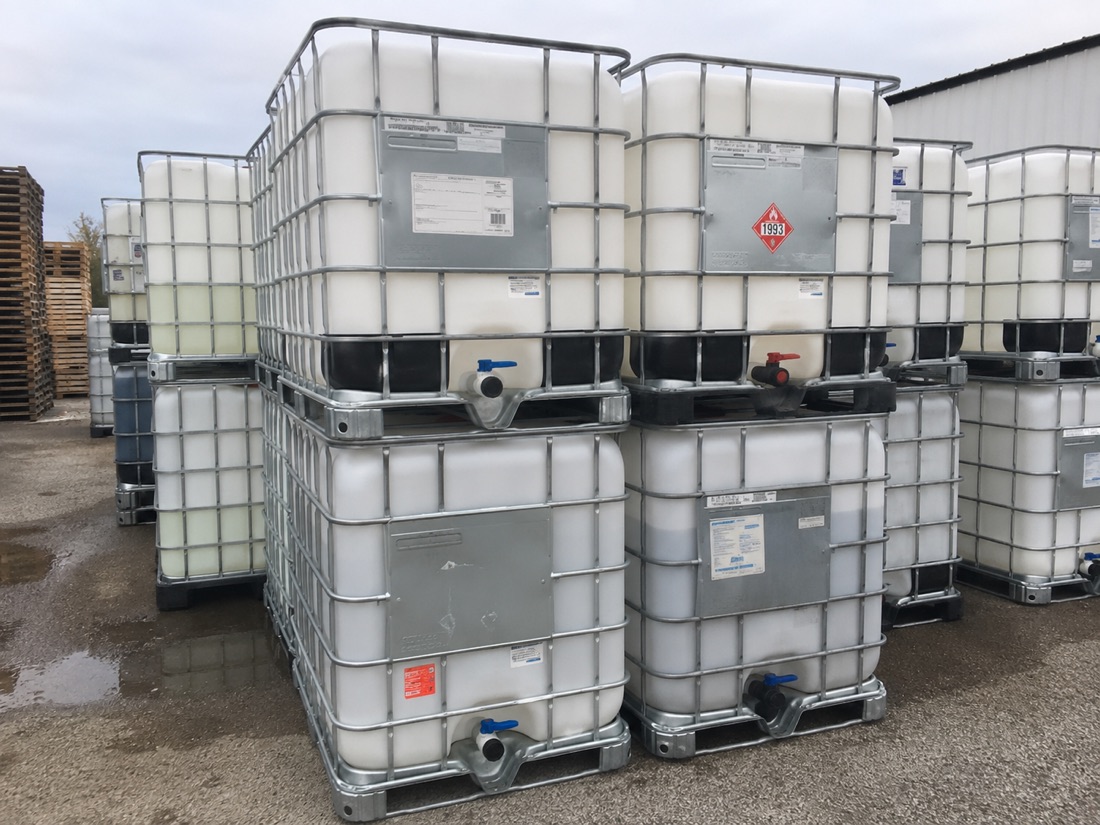
Reconditioned totes, washed and staged for pickup
Inventory
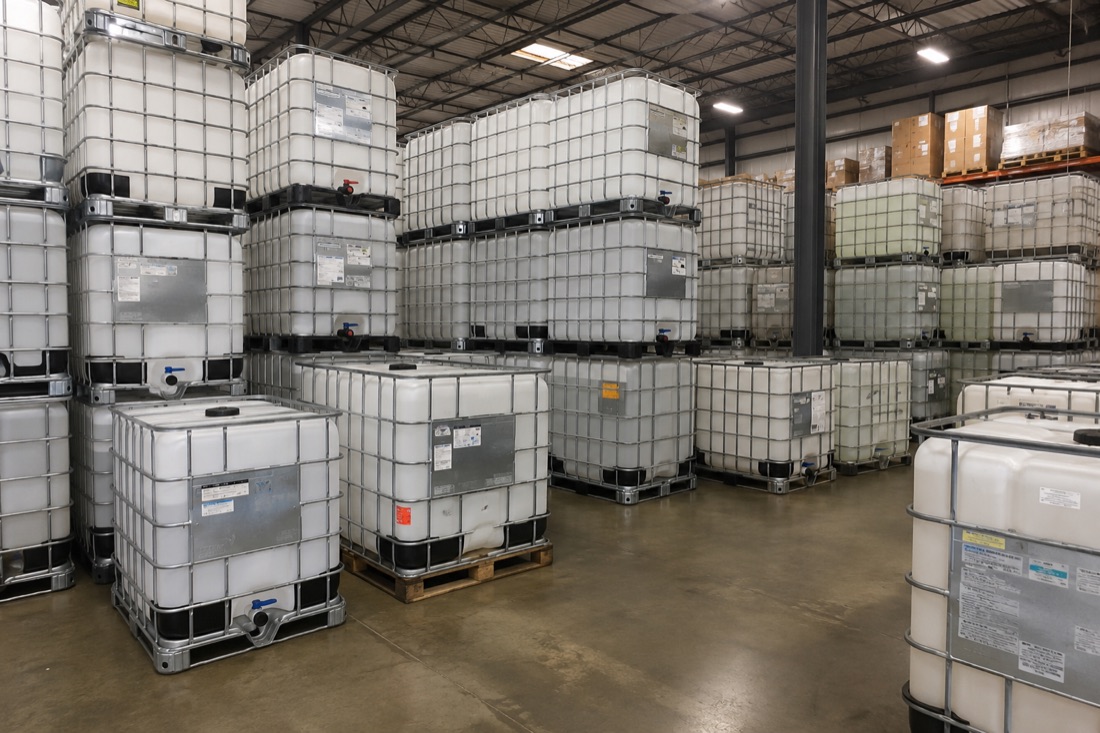
Inside the warehouse — graded stock, ready to ship
Grades
Every grade, from food-safe to as-is, sorted by condition
Logistics
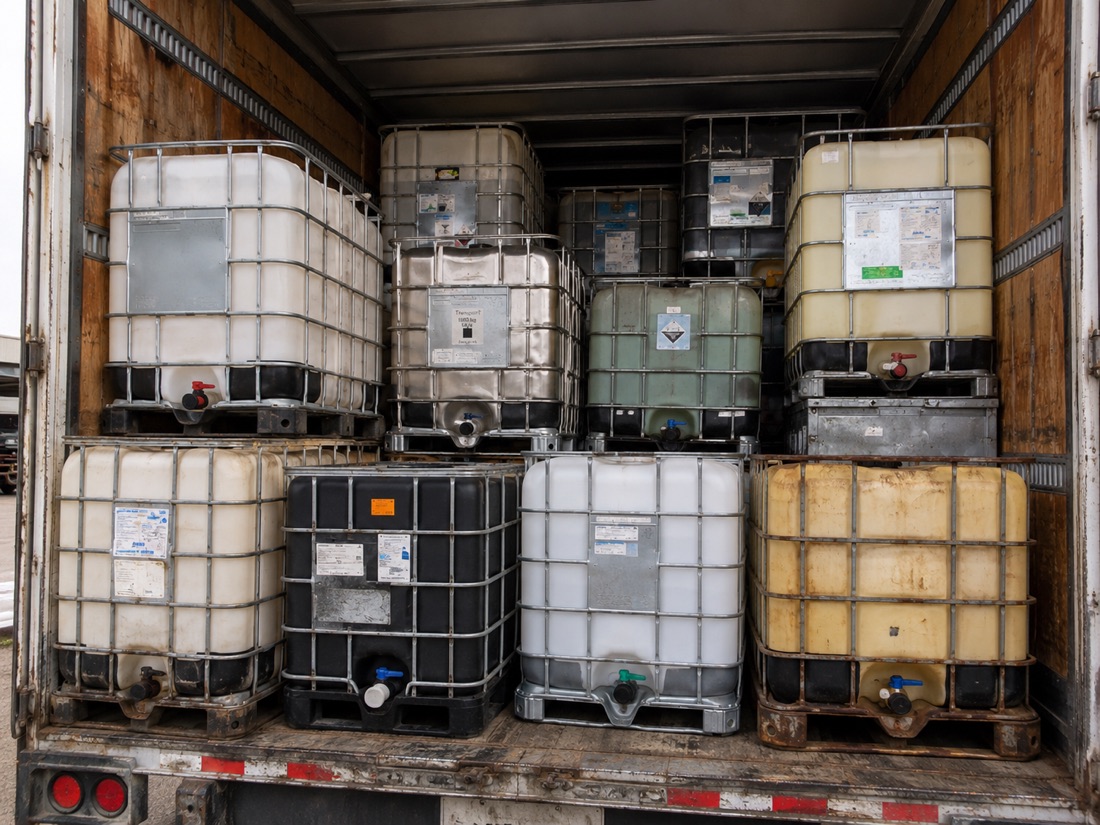
Palletized and loaded for nationwide freight
Nationwide
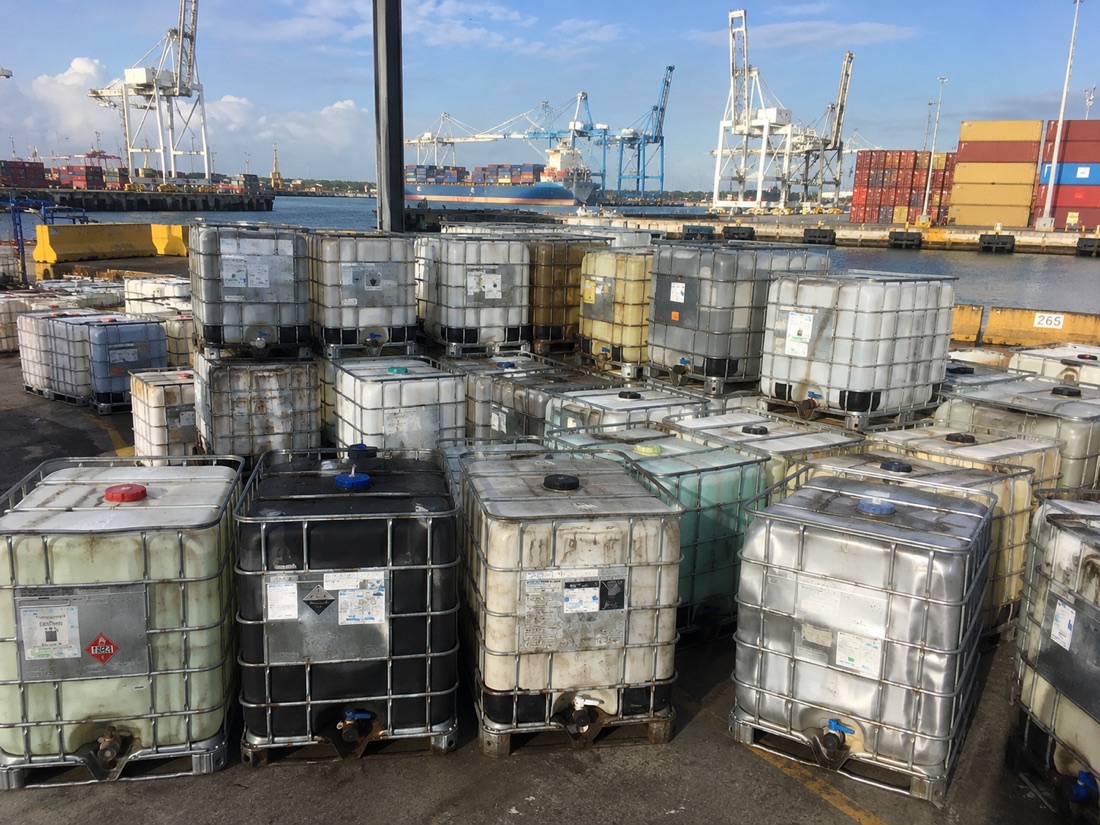
Bulk lots moving coast to coast
Quality
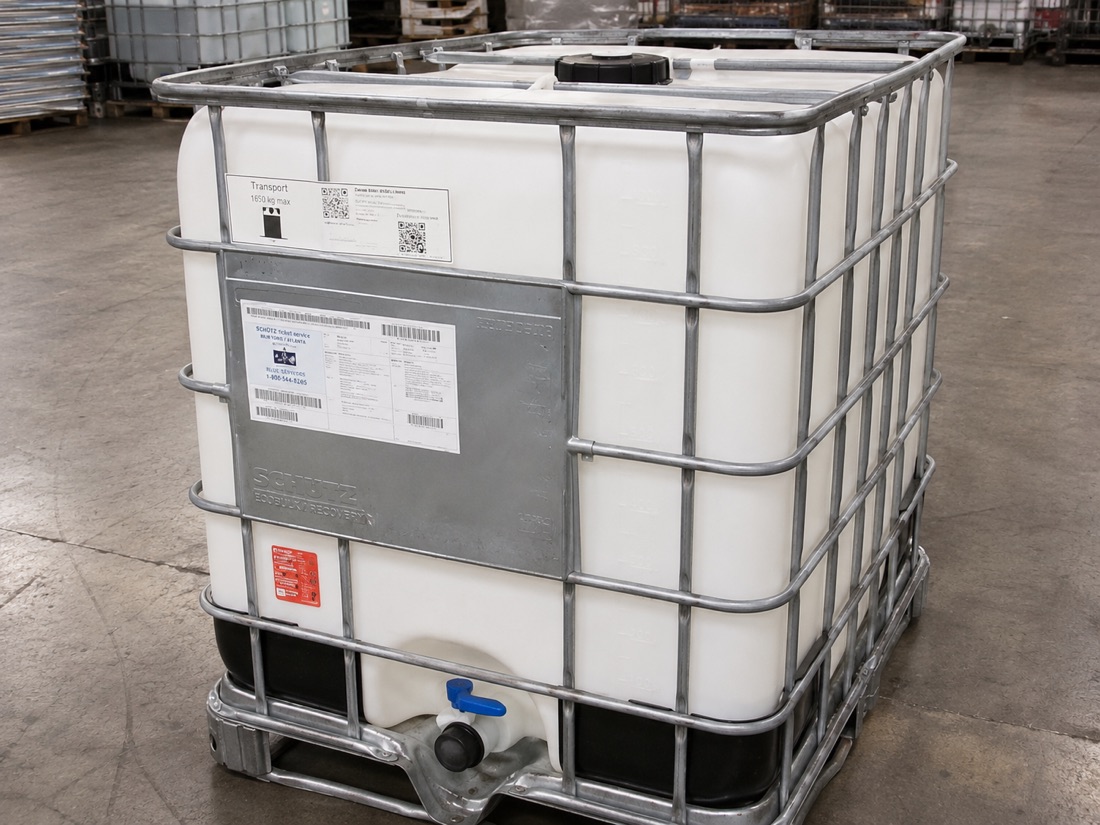
A single composite IBC, inspected and cleared for reuse