EcoIBC USA
Sizes & Specs

IBC Tote Sizes, Dimensions & Specs

The definitive reference for IBC tote dimensions. A standard 275 gallon tote runs ~48 x 40 x 46 in and ~120-150 lbs empty; a 330 gallon tote shares the footprint but stands taller at ~53 in. Below: full capacity, weight, pallet, valve, and fill-cap charts, plus how to choose.

Request a Quote

Get Your Free Quote

Buying, selling, or just curious what your totes are worth? Tell us what you need — we reply within one business day.

US/Canada format, e.g. (512) 555-0123
US ZIP (78744) or Canadian postal (M5V 2T6)
No spam. Email only — we don't even have a phone.
Start Here

One footprint, several heights.

The thing that surprises most first-time buyers: the two most common IBC totes — 275 and 330 gallon — occupy the exact same floor space. Both sit on a standard 48 x 40 inch pallet footprint. The difference is height and, therefore, full weight. That single fact drives most sizing decisions, because it means your constraint is usually ceiling clearance, forklift capacity, or door height — not floor area.

Figures below are typical values for caged composite IBCs (HDPE bottle in a galvanized steel cage on a pallet base). Manufacturers vary by an inch or a few pounds, so always confirm against the tote in front of you. All weights assume water at ~8.34 lbs/gallon; denser products weigh proportionally more.

Chart A

Capacity, dimensions & weight comparison

Length x Width x Height in inches; weights in pounds. "Full (water)" is the gross shipping weight assuming the tote is filled with water.

CapacityL x W x H (in)Empty weightFull (water)Pallet type
120 gal (450 L)40 x 48 x 40~90–110 lbs~1,100 lbsComposite / plastic
275 gal (1,000 L)48 x 40 x 46~120–150 lbs~2,400 lbsSteel, plastic or composite
330 gal (1,250 L)48 x 40 x 53~135–165 lbs~2,900 lbsSteel, plastic or composite
550 gal (2,000 L)48 x 48 x 74~250–300 lbs~4,850 lbsSteel-reinforced

Note: the 275 and 330 gallon totes share the 48 x 40 in footprint — only the height changes. See our deep dive on 275 vs 330 gallon totes.

How To Measure

Measuring a tote you already own.

If you're matching replacement totes to an existing setup, measure the tote itself rather than trusting a stamped nominal capacity, which refers to fill volume, not outside dimensions.

  • Footprint: measure the pallet base L x W — almost always 48 x 40 in.
  • Height: floor to the top of the fill cap — this is your clearance number.
  • Capacity: read the molded gallon/liter marking on the bottle.
  • Cage: steel tubular cage vs. plastic pallet base changes empty weight.

For doorways, racking, and truck decks, the height and footprint are what matter — capacity alone won't tell you if it fits.

Rule of thumb

Same footprint, more height = more capacity.

Going from a 275 to a 330 gallon tote buys you 55 more gallons in the same floor space, at the cost of about 7 inches of height and roughly 500 more pounds when full. If your ceiling, door, and forklift can take it, the taller tote is usually the more space-efficient choice.

Charts B & C

Valve, outlet & fill-cap sizes

The two connection points on every IBC: the bottom outlet valve (for dispensing) and the top fill cap (for filling and venting). Thread standards vary, so these are the common defaults you'll meet most often.

Chart B — Bottom outlet / valve

FittingTypical sizeCommon use
Ball valve2 inStandard dispense
Outlet threadS60x6 buttressValve connection
Butterfly valve2–3 inHigher flow
Camlock adapter2 in Type A/FQuick connect
Garden hose (GHT)3/4 inWater & irrigation

Chart C — Top fill cap / lid

OpeningTypical sizeNotes
Standard fill cap6 in (150 mm)Most common
Large fill cap9 in (225 mm)Faster filling
Vented cap6 in ventedPressure relief
Cap threadButtress / coarseVaries by maker
Adapter6 in to 2 in etc.Fill/venting kits

Need to convert a fitting? We stock adapters and replacement valves — see parts & accessories.

Chart D

Pallet footprint & stacking limits

Stacking ratings are for full totes on flat, rated flooring. Always defer to the manufacturer's stamp and never exceed the rated stack height, especially with dense products.

CapacityFootprint (in)Empty stackFull stack (static)Pallet base
120 gal40 x 48Up to 4 high2 highPlastic
275 gal48 x 40Up to 4 highTypically 2–3 highSteel / plastic / composite
330 gal48 x 40Up to 3 highTypically 2 highSteel / plastic / composite
550 gal48 x 48Not stacked1 high (floor)Steel-reinforced

Two full 275s stack neatly on a standard 40-inch trailer pallet position. For palletized freight, see transport & logistics.

The Reference

Choosing a size — the three real constraints

Space & access

Will it fit?

Check ceiling clearance, doorway height, and racking bay height before capacity. A 330 needs ~53 in plus room to lift the fill cap. If your space is tight vertically, a shorter 275 or 120 may be the only option even if you'd prefer more gallons.

Forklift & floor

Can you lift & hold it?

A full 330 of water is ~2,900 lbs; denser products push well past a standard 3,000–5,000 lb forklift rating fast. Confirm your lift capacity and floor loading before sizing up. Water is the light case, not the worst case.

Product density

What's going in it?

Water is ~8.34 lbs/gal. A syrup or concentrate at 1.3 specific gravity adds ~30% to every full-weight number in these charts. Size your tote and your handling equipment to the actual liquid, not to water.

Dimensional weight & shipping

For freight, an empty IBC is a classic "light but bulky" item, so carriers often price it on dimensional (DIM) weight rather than actual weight. A 275 gallon tote occupies roughly 48 x 40 x 46 in — about 51 cubic feet. Using a common DIM divisor, that footprint can bill out heavier than the tote's ~130 lb actual weight, which is why loose empties ship expensively and palletized full totes often ship more efficiently per gallon.

A single 48 x 40 in pallet position holds one full IBC or two stacked empties. A standard 53-ft dry van fits roughly 40–52 IBC footprints on the floor depending on stacking and load rules. If you're moving totes in volume, stacking empties and consolidating loads is where the real freight savings live — something our nationwide logistics team plans for you.

Sizing FAQ

Quick answers

Are all 275 gallon totes the same size?
Nearly. The footprint is a standard 48 x 40 in and height is ~46 in across most manufacturers, but empty weight varies (~120–150 lbs) depending on whether the base is a steel, plastic, or composite pallet. Always confirm the height and cap position for clearance.
How much does a full IBC tote weigh?
Filled with water: a 275 is ~2,400 lbs, a 330 is ~2,900 lbs, and a 550 is ~4,850 lbs gross. Denser liquids weigh proportionally more — multiply by the product's specific gravity.
What outlet valve comes standard?
Most totes ship with a 2 inch ball valve on an S60x6 buttress-thread outlet. Camlock, garden-hose, and NPT adapters are available — see accessories.
Which size is right for me?
If vertical space and forklift capacity allow, a 330 gives more gallons per square foot than a 275 in the same footprint. Tight ceilings or lighter lifts point to the 275 or 120. Compare them in our 275 vs 330 guide or ask us for a recommendation.
Shop IBC totes →Read the full tote guide
Chart E

Full weight by product density

The charts above assume water. Real products are rarely water. This table shows how gross full weight shifts with specific gravity (SG) — the ratio of a liquid's density to water. Size your forklift and floor to the actual liquid, not the light case.

Product exampleApprox. SG275 gal full330 gal full
Isopropyl / light solvent~0.8~1,970 lbs~2,340 lbs
Water (baseline)1.0~2,400 lbs~2,900 lbs
Liquid fertilizer~1.2~2,880 lbs~3,480 lbs
Syrup / concentrate~1.3~3,120 lbs~3,770 lbs
Heavy brine / dense acid~1.5~3,600 lbs~4,350 lbs

Full weight ≈ (gallons × 8.34 lbs × SG) + empty tote weight. A dense product can push a full 330 past a standard 5,000 lb forklift once you add the empty weight.

Handling & Safety

Forklift capacity, floor loading & safe stacking.

A full tote is a serious load. Before you size up, confirm three things: what your forklift is rated to lift, what your floor is rated to hold, and how high the manufacturer allows the tote to be stacked when full. Water is the easy case — dense products are where handling limits get exceeded quietly.

  • Lift rating is quoted at a load center (often 24 in). A wide tote can derate your truck — check the load chart.
  • Floor loading matters for stacked full totes; a 2-high stack of 330s can exceed 5,800 lbs on one footprint.
  • Static vs. dynamic stack ratings differ — a stack safe standing still may not be safe in transit.
  • Cage integrity — never stack on a tote with a bulged or damaged cage.

For safe handling by product type, see our safety & compliance guide.

Quick lift-check

Full tote weight vs. common forklift ratings.

Full tote (water)Min. lift class
120 gal — ~1,100 lbsAny standard lift
275 gal — ~2,400 lbs3,000 lb+ lift
330 gal — ~2,900 lbs3,500 lb+ lift
550 gal — ~4,850 lbs5,000 lb+ lift

Dense products add up fast — re-check with Chart E for your actual SG.

Freight Math

Dimensional weight, explained for totes.

An empty IBC is the textbook "light but bulky" freight item, so LTL carriers often bill it on dimensional (DIM) weight rather than actual weight. DIM weight converts the space a shipment occupies into a billable weight using a divisor set by the carrier.

Worked example

A 275 gallon tote is about 48 × 40 × 46 in = 88,320 cubic inches, or roughly 51 cubic feet. With a common DIM divisor of 139 (cubic inches per pound), that footprint bills at about 635 lbs — far above the tote's ~130 lb actual weight. The carrier charges on whichever is greater, so an empty tote almost always ships on its size, not its scale weight.

Why full totes ship more efficiently per gallon

A full tote uses the same footprint but carries thousands of pounds of product, so its actual weight exceeds DIM weight and you pay for real mass you actually wanted to move. That's the counterintuitive rule of tote freight: loose empties are the expensive thing to ship, and consolidation is where the savings live.

Loading a trailer

A single 48 × 40 in pallet position holds one full IBC or two stacked empties. A standard 53-ft dry van fits roughly 40–52 IBC footprints on the floor depending on stacking and load rules. Stacking empties and consolidating loads is exactly what our nationwide logistics team plans — including nationwide shipping for volume moves.
Decision Guide

Pick a size in four questions.

How much ceiling and door clearance do you have?

Under ~50 in of usable height points to a 275 (~46 in) or 120. Plenty of headroom opens up the taller 330 (~53 in) and its extra 55 gallons in the same footprint.

What does your forklift lift, and your floor hold?

Standard 3,000 lb lifts handle a full 275 of water; a full 330 wants 3,500 lb+. Dense products (Chart E) can require more. Confirm floor loading for stacked full totes.

How dense is your product?

Water is the light case at 8.34 lbs/gal. A 1.3 SG concentrate adds ~30% to every full-weight number. Size the tote and the handling gear to the actual liquid.

How many gallons per square foot do you need?

When space is the constraint, the 330 is the most space-efficient common tote — more capacity than a 275 in the identical 48 × 40 in footprint.

275 vs 330, in depthBrowse all totes →
Reduce · Reuse · Recycle

Not sure which size you need?

Tell us your product, your volume, and your dock — we'll spec the right tote and quote it, usually within one business day.

Contact Us
Straight From the Yard

Real totes. A real loop. 7000 Burleson Rd.

A look inside our Austin operation — buying, grading, reconditioning, and loading IBC totes for reuse across all 50 states.

The Yard
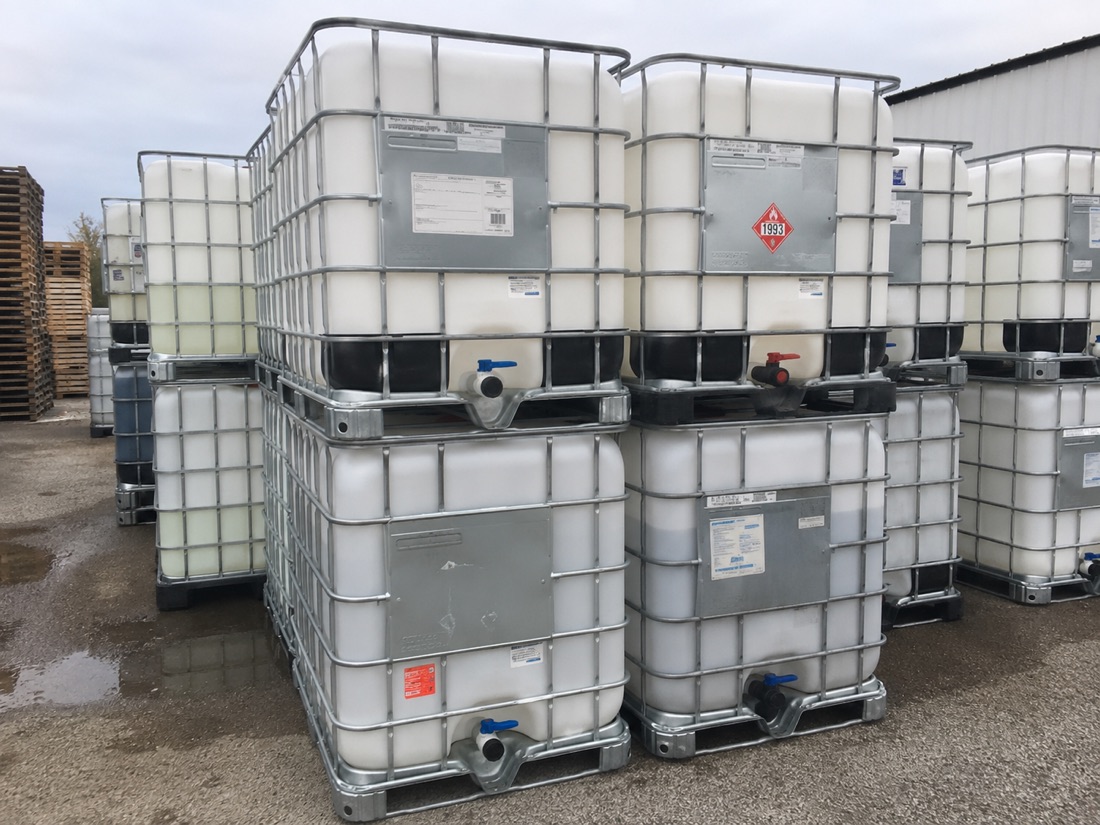
Reconditioned totes, washed and staged for pickup
Inventory
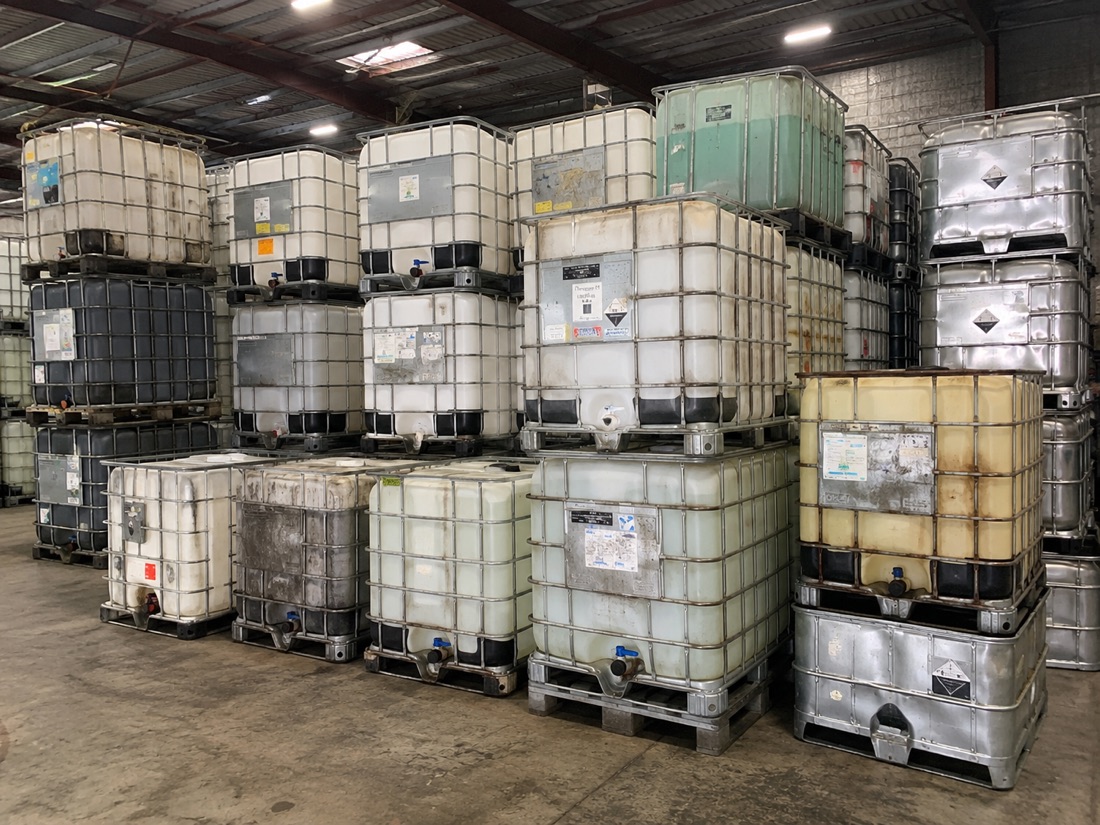
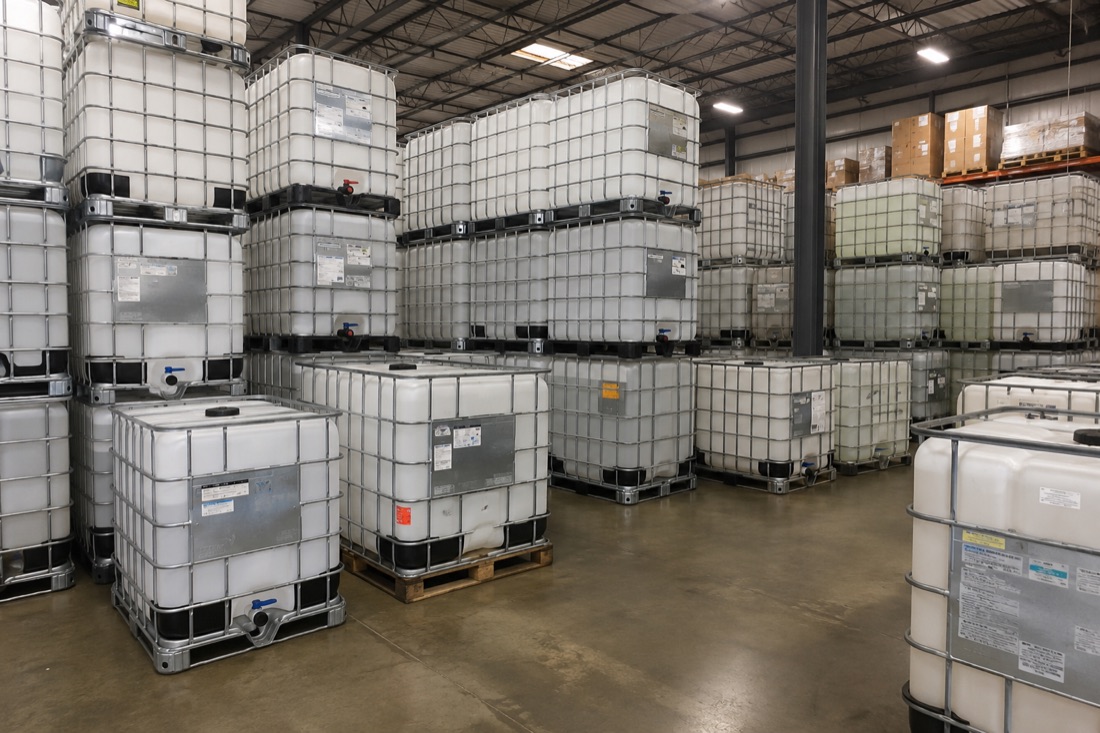
Inside the warehouse — graded stock, ready to ship
Grades
Every grade, from food-safe to as-is, sorted by condition
Logistics
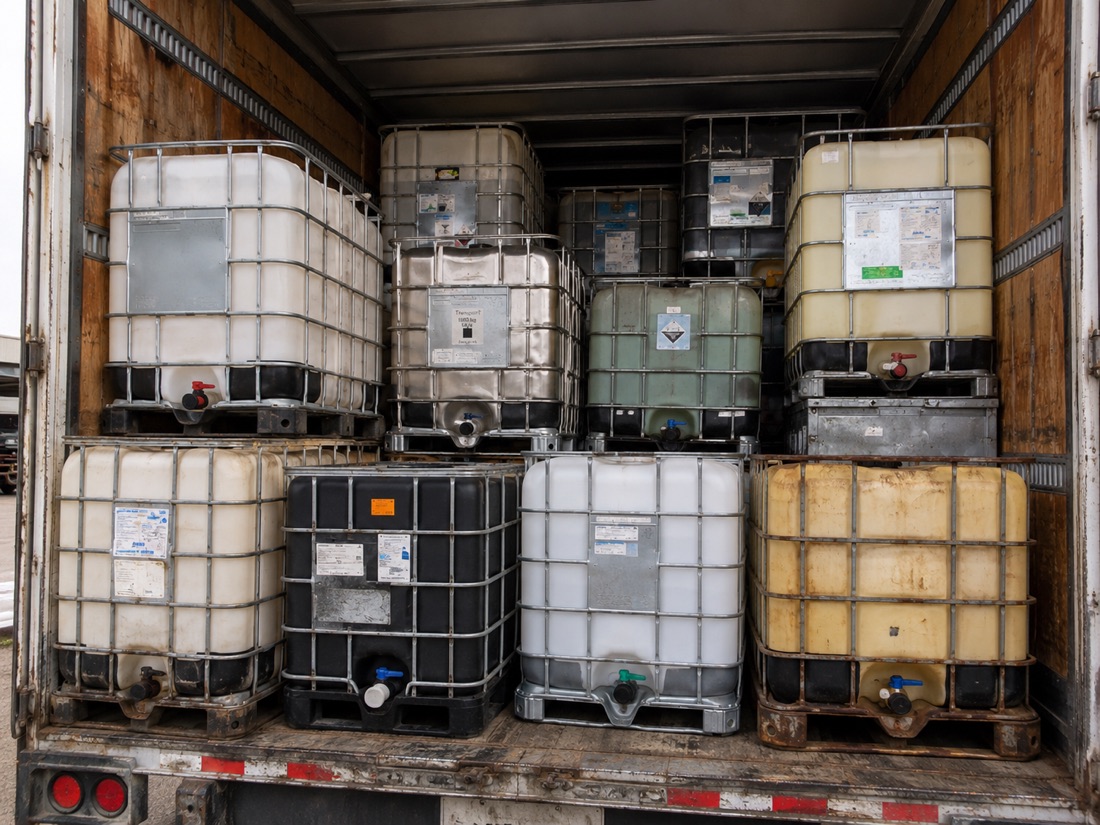
Palletized and loaded for nationwide freight
Nationwide
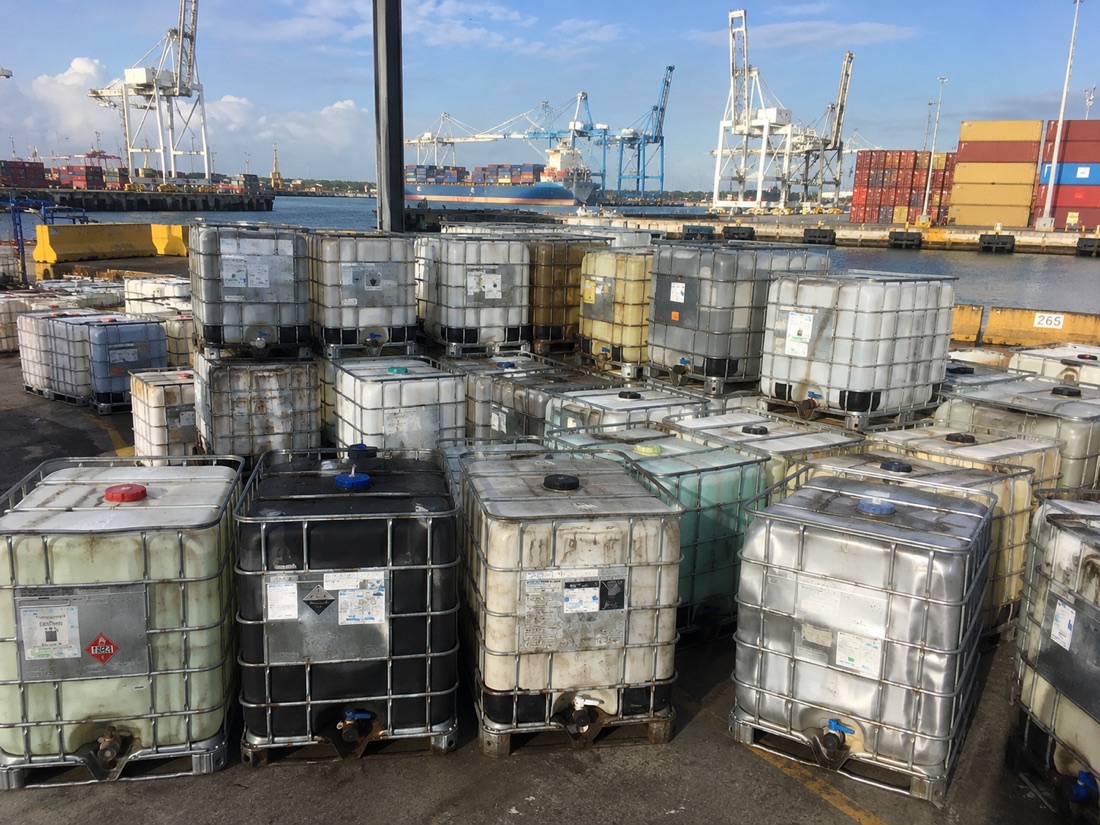
Bulk lots moving coast to coast
Quality
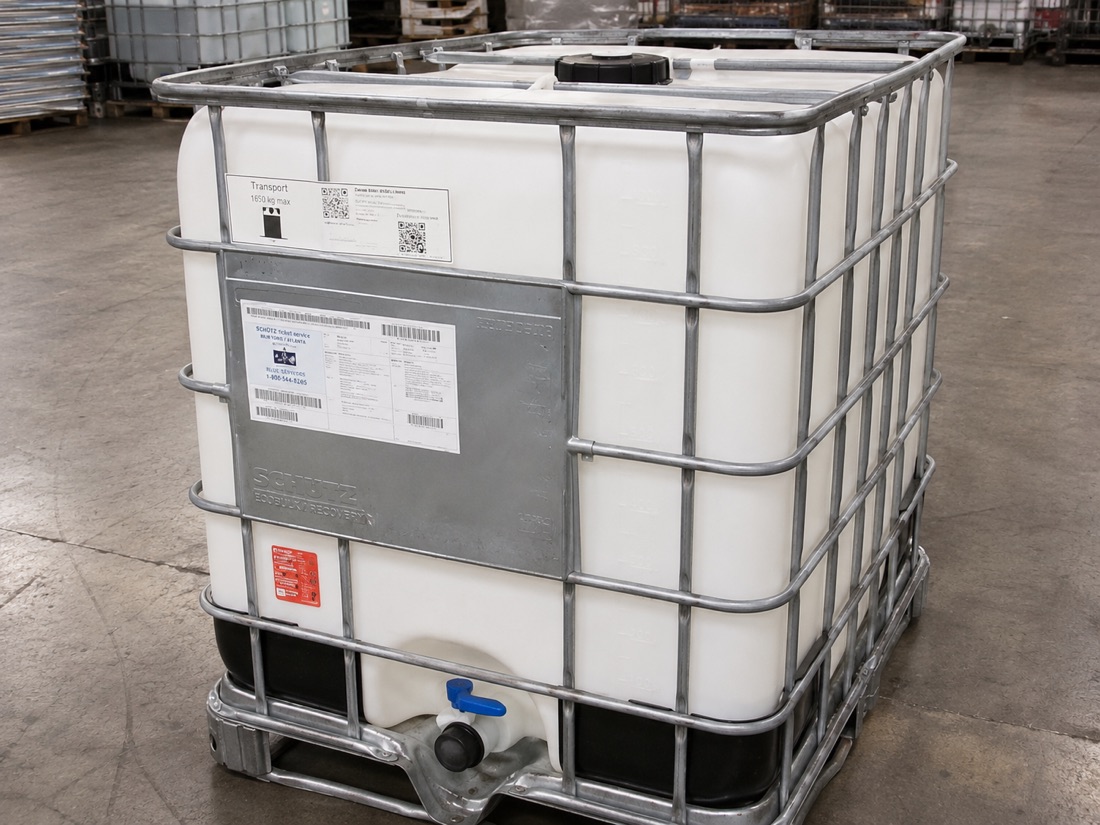
A single composite IBC, inspected and cleared for reuse