Plastic (HDPE)
The virgin high-density polyethylene that would have been blow-molded into a new bottle — roughly 40–60 lbs per tote — never gets extracted or processed.
Reuse isn't a vibe — it's arithmetic. Punch in how many totes you're keeping in circulation and watch the plastic, steel, water, and carbon savings add up, live.
Run your numbers below, then send us a quote request — we'll match you with reused totes that hit your target.
Reusing 30 × 275 Gallon totes vs. manufacturing them new.
Get a quote on reused totes and start your own loop.
Methodology: figures are illustrative program estimates based on an average composite IBC (HDPE bottle + galvanized steel cage) and typical embodied-energy and emissions ratios for reconditioning vs. new manufacture. Real savings vary by tote, resin, and freight. See our full methodology.
The greenest IBC is the one that already exists. Manufacturing a new composite tote means extracting petroleum for virgin HDPE, forging and galvanizing steel for the cage, and shipping it all — before it ever holds a drop of product. Reconditioning skips almost all of that.
The calculator turns a tote count into four savings figures. Here's what each one represents — and why it's a savings avoided, not a cost you paid.
The virgin high-density polyethylene that would have been blow-molded into a new bottle — roughly 40–60 lbs per tote — never gets extracted or processed.
The galvanized cage and pallet base stay in service instead of being fabricated new. That embodied steel and energy is preserved, not re-spent.
Manufacturing virgin plastic is water-intensive. Reuse avoids the process water a new tote would have demanded — an indirect but real saving.
The carbon-dioxide-equivalent of manufacturing and shipping a replacement tote. Reuse avoids most of it; freight is the part that still counts.
No black box. Every figure the calculator shows is your tote count multiplied by a per-tote reference value, using conservative averages rather than best-case numbers so the totals hold up to scrutiny.
We model a typical reconditioned composite IBC at roughly 100 lbs of recoverable material: on the order of 40–60 lbs of HDPE in the bottle, plus a galvanized steel cage and pallet base making up the balance. A 275-gallon unit is lighter than a 550, so we use a conservative average rather than the heaviest tote to avoid inflating totals.
The savings compare reconditioning an existing tote — washing, pressure-testing, and re-bottling where needed — against manufacturing a new HDPE bottle and fabricating a new steel cage and pallet from scratch. That's where the order-of-90%-less-energy framing comes from. It's a directional, order-of-magnitude estimate consistent with published reuse-versus-new analyses for rigid HDPE containers — not a certified LCA.
These per-tote values are the same ones documented on our sustainability methodology page, which walks through the stage-by-stage life-cycle view and the resource ledger in full. If a number matters to your own reporting, that page is the place to start — and we'll gladly walk you through the assumptions for your specific totes and lanes.
Credible math needs stated limits. These are the guardrails behind every number the calculator produces, so you know exactly how conservative (or not) the figures are.
| Resource | Approx. saved / tote |
|---|---|
| Virgin HDPE | ~40–60 lbs |
| Steel & pallet | ~40–60 lbs |
| Manufacturing energy | ~90% vs. new |
| Landfill volume | ~51 cu ft |
Same values used across the site. Full detail on the sustainability page.
Tell us your target quantity and ZIP — we'll quote reused totes that make these numbers your numbers.
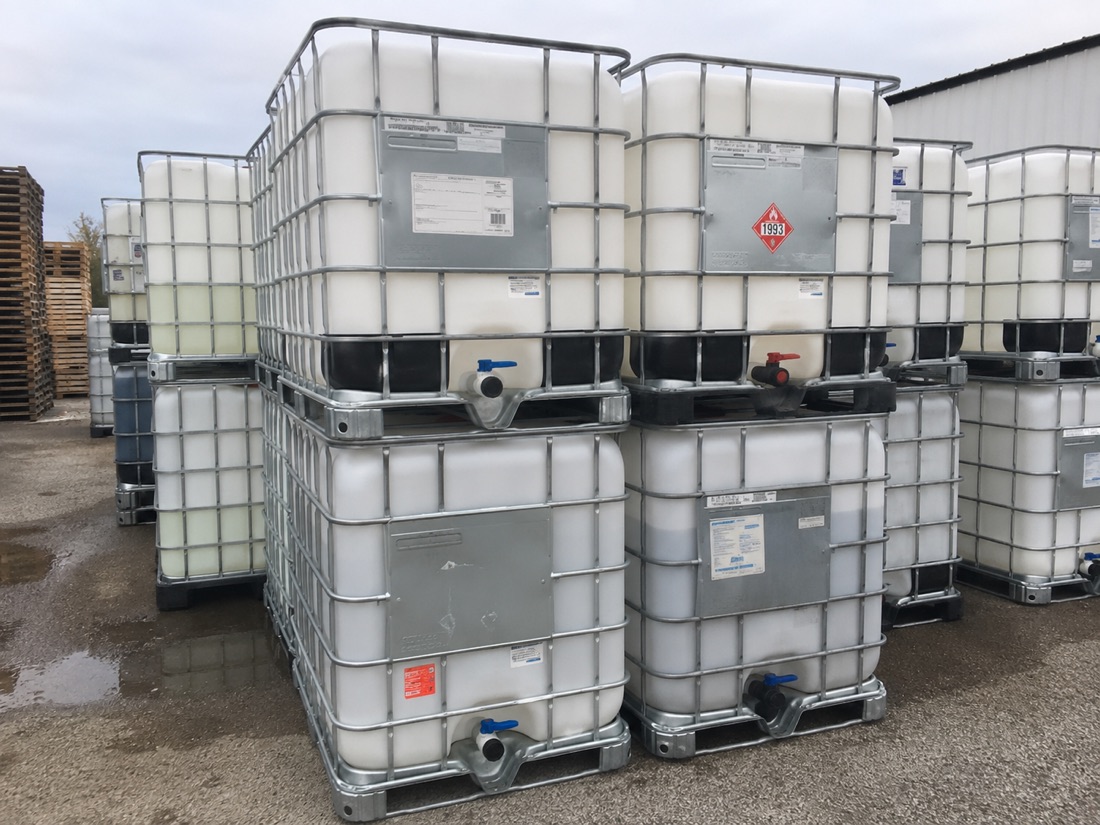
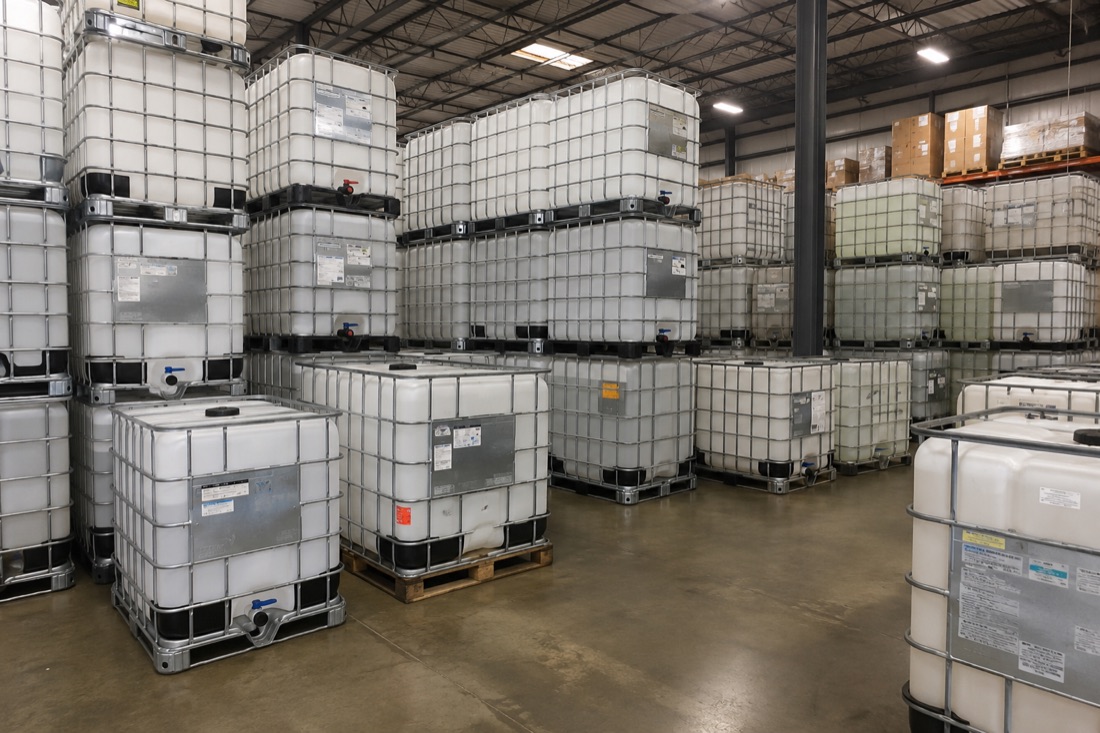
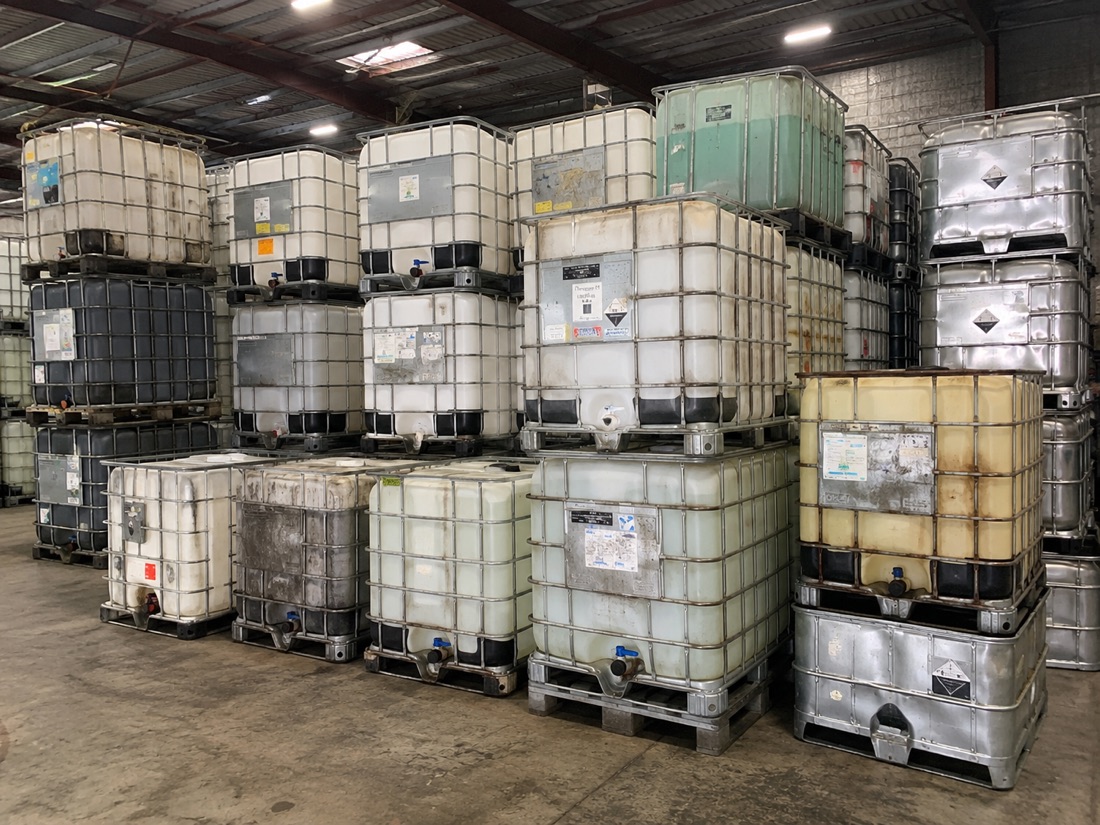
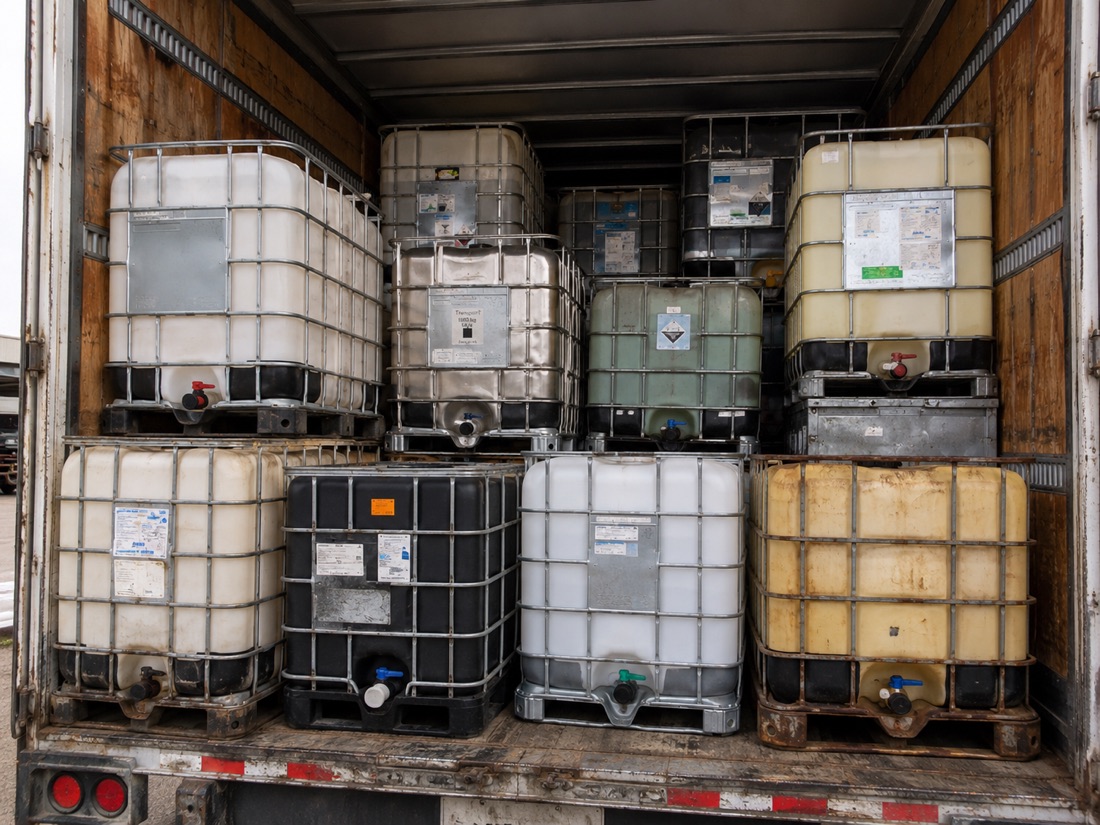
A look inside our Austin operation — buying, grading, reconditioning, and loading IBC totes for reuse across all 50 states.
One form. Buying, selling, recycling, or freight — we'll route it to the right person and reply within one business day.