EcoIBC USA
Article

How IBC Totes Are Reconditioned: A Step-by-Step Deep Dive

Reconditioning is what turns a used-up empty into a container that performs like new — using a fraction of the energy it takes to build one from scratch. Follow a tote through all nine stages of the loop, from the moment it hits our intake dock to the day it ships back out.

Request a Quote

Get Your Free Quote

Buying, selling, or just curious what your totes are worth? Tell us what you need — we reply within one business day.

US/Canada format, e.g. (512) 555-0123
US ZIP (78744) or Canadian postal (M5V 2T6)
No spam. Email only — we don't even have a phone.
~90%
Less embodied energy vs. new
~100lbs
HDPE & steel kept in service
9steps
From intake to shipment
0
Totes sent to landfill needlessly

A composite IBC is expensive to manufacture and built to last, which is exactly why reconditioning makes so much sense. Instead of grinding a tote into flake or burying it, reconditioning restores it to service through a disciplined sequence of cleaning, repair, and testing. Done right, the result is a container that holds product as reliably as a new one — at a lower price and a tiny fraction of the environmental cost. Here is every step.

01

Intake & sorting

Empties arrive by pallet and truckload. We log prior contents, size, and source, then sort by likely grade. Totes that held food-safe products are kept separate from industrial stock from the very first step to protect food-grade integrity.

02

Inspection & triage

Each tote is examined: cage welds and tubes for cracks or heavy rust, the bottle for bulges, gouges, and crazing, the valve and gasket for wear, and the pallet for damage. Triage decides the path — wash, rebottle, re-cage, or retire the frame for parts and repurposing.

03

Draining & residue capture

Any remaining product is drained and captured for proper handling or disposal. Nothing goes down the drain. This step matters both for worker safety and because clean separation of residue is what makes the finished tote trustworthy.

04

Caustic & pressure wash

Washable bottles run through a hot caustic wash to break down residue, followed by a high-pressure interior blast and a clean rinse. For food-grade candidates the cycle is more rigorous and validated. The exterior cage and pallet get cleaned too.

05

Re-bottling (when needed)

When a bottle is too worn, stained, or incompatible with future use, we pull it and drop in a brand-new HDPE bottle. This is what creates a rebottled Grade A tote: a factory-fresh interior inside a serviceable cage and base at well below new-tote cost.

06

Re-caging & hardware

Bent or corroded cages are straightened or replaced, and worn valves, gaskets, and caps are swapped for new. A fresh valve and a sound cage are the two things a buyer feels first, so we don’t cut corners here.

07

Pressure & leak test

Reassembled totes are pressure and leak tested to confirm the bottle, valve, and seals hold. UN/DOT-rated units are verified against their marking. A tote that can’t pass doesn’t ship as a functional container — it goes to parts or repurposing instead.

08

Grading & labeling

Passing totes are assigned a grade — Food Grade, Grade A, or Grade B — and labeled with prior contents and any rebottle/rewash stamps. Transparent grading is the whole point: you know exactly what you’re buying.

09

Storage & shipping

Graded totes are stored off the ground and out of the sun until they’re matched to an order, then palletized and shipped LTL or by full truckload to any ZIP in the lower 48. The loop closes when a retired tote goes back to work instead of into a landfill.
Why reconditioning beats recycling

People often lump the two together, but they're very different on the sustainability ladder. Recycling means shredding a tote, melting the plastic, and re-forming it — energy-intensive, and it degrades the material each cycle. Reconditioning keeps the tote whole and simply returns it to service, skipping the grinding and melting entirely. Reuse sits above recycling for a reason: it preserves nearly all of the embodied energy already invested in the container.

That's why every reconditioned tote we ship keeps roughly 100 lbs of HDPE and steel in circulation and avoids the energy of building a new one. Multiply that across a truckload and the impact is real. You can see the math for your own volume in our eco calculator, and read the full methodology on the sustainability page.

Where it fits in the loop

Reconditioning is the middle of a four-part cycle: we buy empties, recondition them, sell them back into service, and haul them both directions. The totes that can't be restored aren't wasted either — their parts and frames feed our upcycled goods. Learn more about the recovery side on our recycling & reconditioning service page, or start from the top with the complete IBC tote guide.

Inside the Wash

What actually happens in the caustic wash

The wash line is the heart of reconditioning, and it's more science than scrubbing. A used bottle carries a film of whatever it last held — dried syrup, cured adhesive, mineral scale, or chemical residue. Cold water barely touches most of that, which is why the process leans on heat, chemistry, and pressure working together:

  • Hot caustic solution breaks down organic residue, oils, and films that water alone can't lift — the same chemistry as an industrial dishwasher, scaled up.
  • High-pressure interior blast reaches every wall and the hard-to-clean base radius where residue collects.
  • Clean-water rinse flushes out the caustic and loosened residue so nothing is left behind.
  • Validated cycles for food-grade run longer, hotter, and are documented so the finished tote can be certified.

Not every bottle is a wash candidate. If residue is baked on, the plastic is stained or crazed, or the prior product isn't compatible with the tote's next life, the bottle is retired and the tote is rebottled instead. That judgment call — wash or rebottle — is what separates a washed Grade A from a rebottled Grade A. Both are covered in Grades Explained.

Nothing goes down the drain. Drained product and wash residue are captured and handled properly — clean separation is exactly what makes a finished tote trustworthy.
Quality Control

How we know a reconditioned tote actually holds

A clean-looking tote isn't the same as a sound one. Before anything ships, it has to prove it can do its one job — contain liquid reliably. Testing and grading are where reconditioning earns trust:

Pressure & leak testing

Reassembled totes are pressure and leak tested to confirm the bottle, valve, and seals all hold. A unit that can't pass doesn't ship as a functional container — it goes to parts or repurposing instead. For UN/DOT-rated totes, the unit is verified against its stamped marking.

Transparent grading

Passing totes are assigned a grade — Food Grade, Grade A, or Grade B — and labeled with prior contents and any rebottle or rewash stamps. The grade isn't a marketing tier; it maps directly to the cleaning steps the tote actually went through. That's the whole point: you know exactly what you're buying before it arrives.

Documentation that follows the tote

Prior-contents disclosure travels with the unit, which is what lets a buyer trust a food-grade claim or match a tote to a regulated product. For anything food, animal, or potable, that paper trail is non-negotiable — see the safety & compliance guide.

Reconditioned vs. New

Reconditioned vs. new: an honest comparison

FactorReconditionedNew
CostUp to ~60% lessHighest
Embodied energy~90% lessFull manufacturing burden
Material kept in service~100 lbs per toteNew virgin material
Performance (non-critical use)IdenticalIdentical
Prior historyDisclosedNone (first use)
Best forMost storage & industrial jobsZero-history hazmat, pharma, sensitive food
AvailabilityDeep, quick to sourceLead-time dependent

For the large majority of applications, a reconditioned tote is the smarter buy on every axis that isn't "must be first-use." Browse reconditioned totes or new totes, and read the complete guide to decide.

The Bigger Picture

One tote, kept in the loop for a decade

Picture the life of a single well-cared-for tote. It leaves a factory, carries syrup for a food producer, comes back to us empty. We drain it, wash it, test it, grade it food-grade, and ship it to a brewery. A few years later it returns again; this time the bottle is tired, so we rebottle it and it heads out as a Grade A industrial tote. Eventually the cage itself retires — and even then the frame becomes a planter or rain-barrel stand. One container, a decade of service, and not a pound to the landfill.

That's the circular economy made concrete, and it's the model our whole business runs on. See how the pieces connect on the sustainability page and quantify it in the eco calculator.

Common Questions

Reconditioning FAQ

Is a reconditioned tote as good as a new one?

For the large majority of storage and industrial jobs, yes — a reconditioned tote that passes pressure and leak testing performs identically to new, at a fraction of the cost and environmental impact. New totes earn their premium only where zero prior history is a hard requirement.

How can a used tote be certified food-grade?

Only if it held nothing but food-safe products across its life and was cleaned in a validated, documented cycle. Food-grade candidates are separated from industrial stock at intake and run through a more rigorous wash. History plus certification — not cleaning alone — is what makes it food-grade. See Grades Explained.

What happens to the wash residue and drained product?

It's captured and handled properly — nothing goes down the drain or onto the ground. Clean separation of residue is both a worker-safety measure and the reason a finished tote can be trusted.

What happens to totes that fail inspection?

They aren't wasted. Sound parts, cages, and frames feed our upcycled goods and material recovery through our recycling service, so even a failed tote stays out of the landfill.

Reduce · Reuse · Recycle

Want a professionally reconditioned tote?

Every unit we sell has been through this exact process. Tell us the grade and size you need.

Contact Us
Straight From the Yard

Real totes. A real loop. 7000 Burleson Rd.

A look inside our Austin operation — buying, grading, reconditioning, and loading IBC totes for reuse across all 50 states.

The Yard
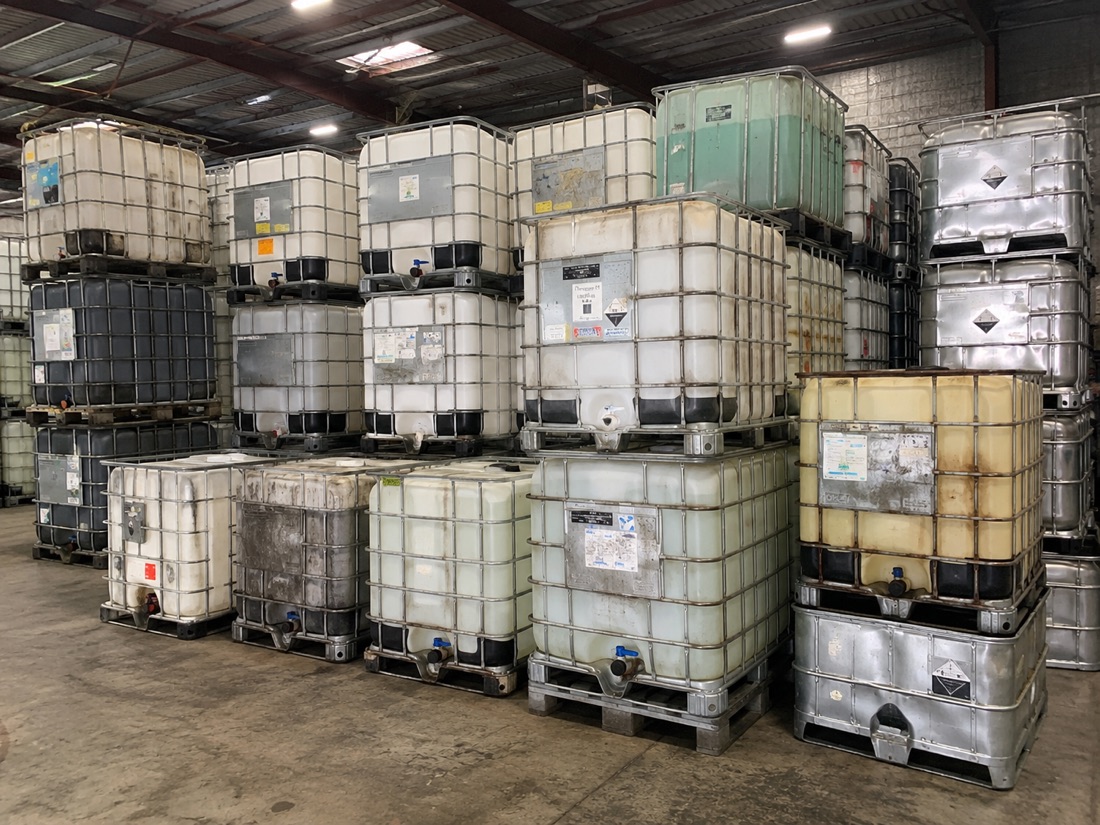
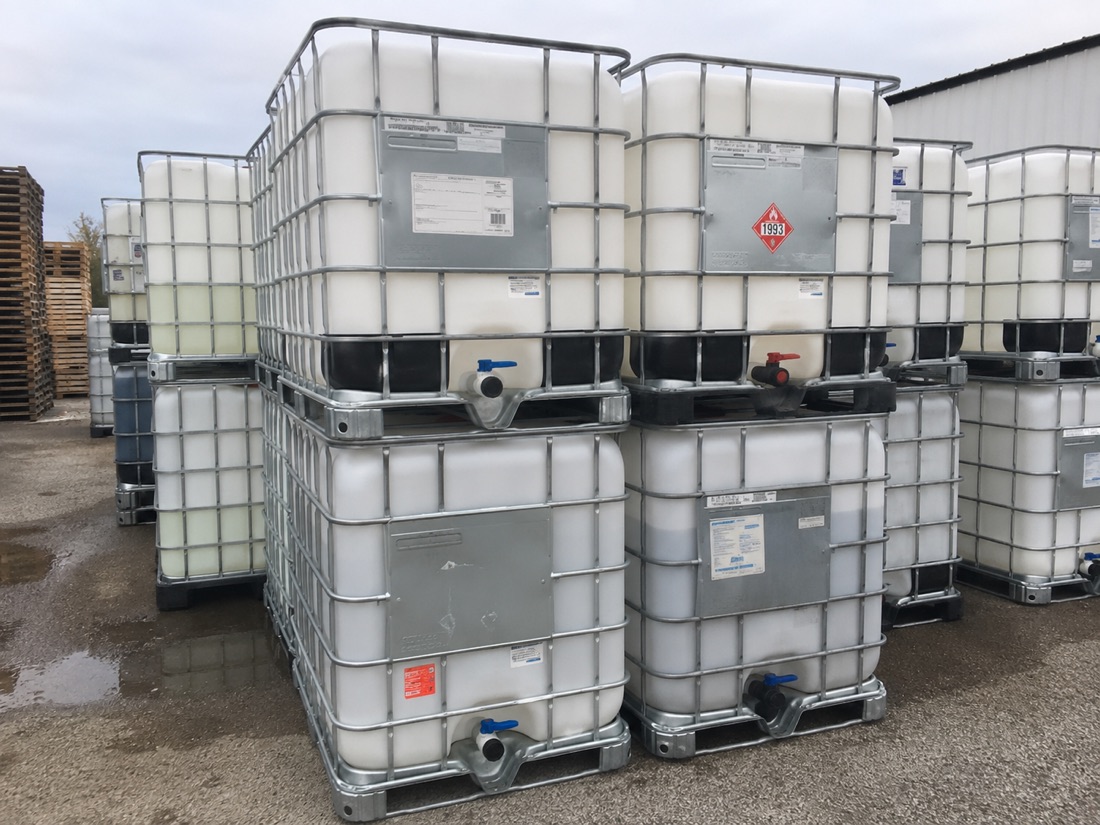
Reconditioned totes, washed and staged for pickup
Inventory
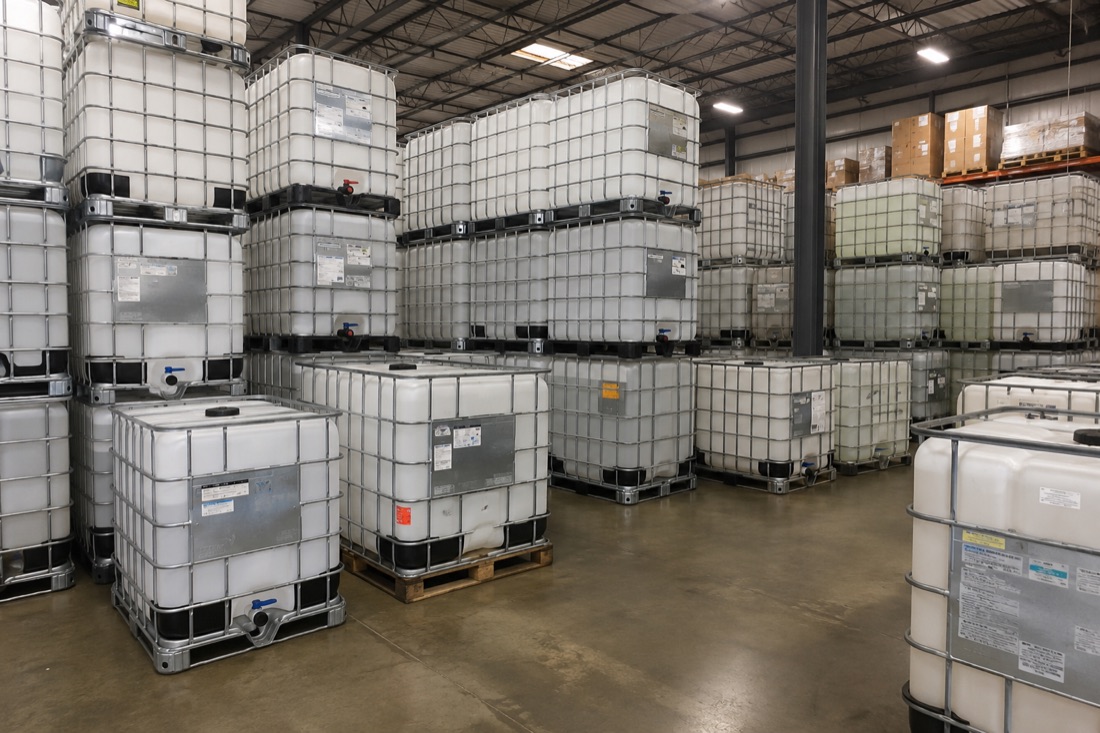
Inside the warehouse — graded stock, ready to ship
Grades
Every grade, from food-safe to as-is, sorted by condition
Logistics
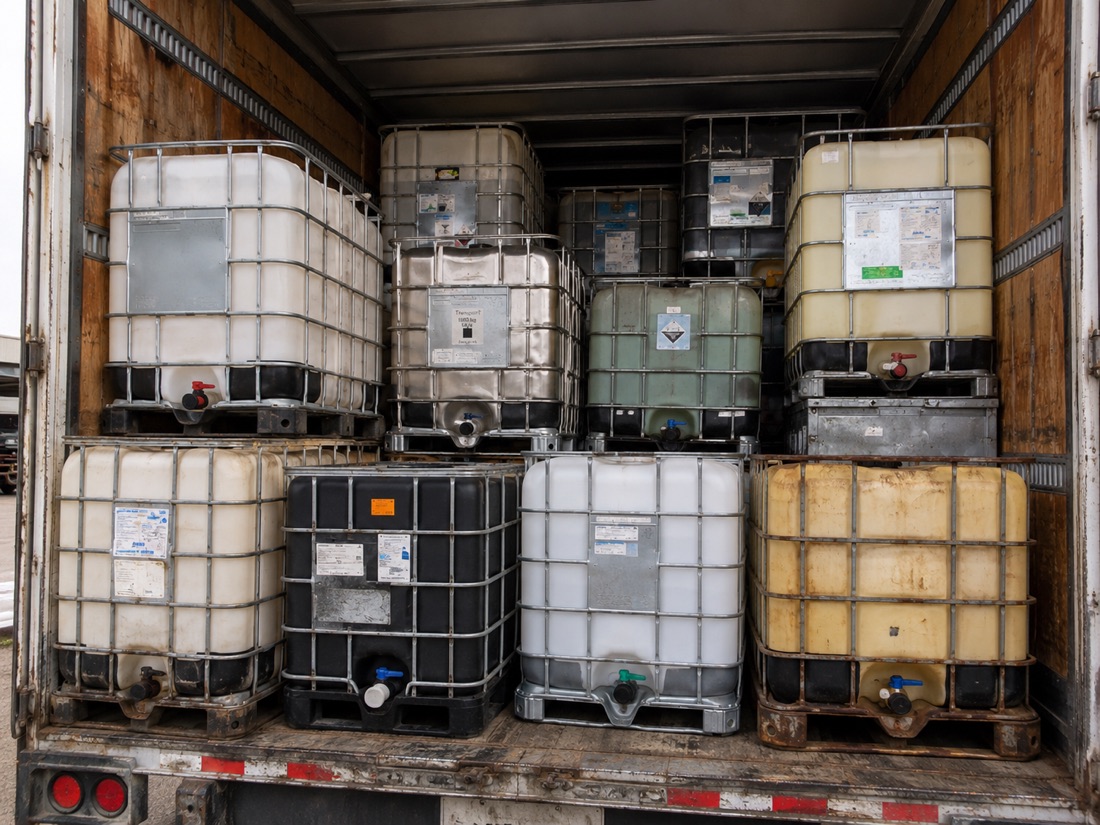
Palletized and loaded for nationwide freight
Nationwide
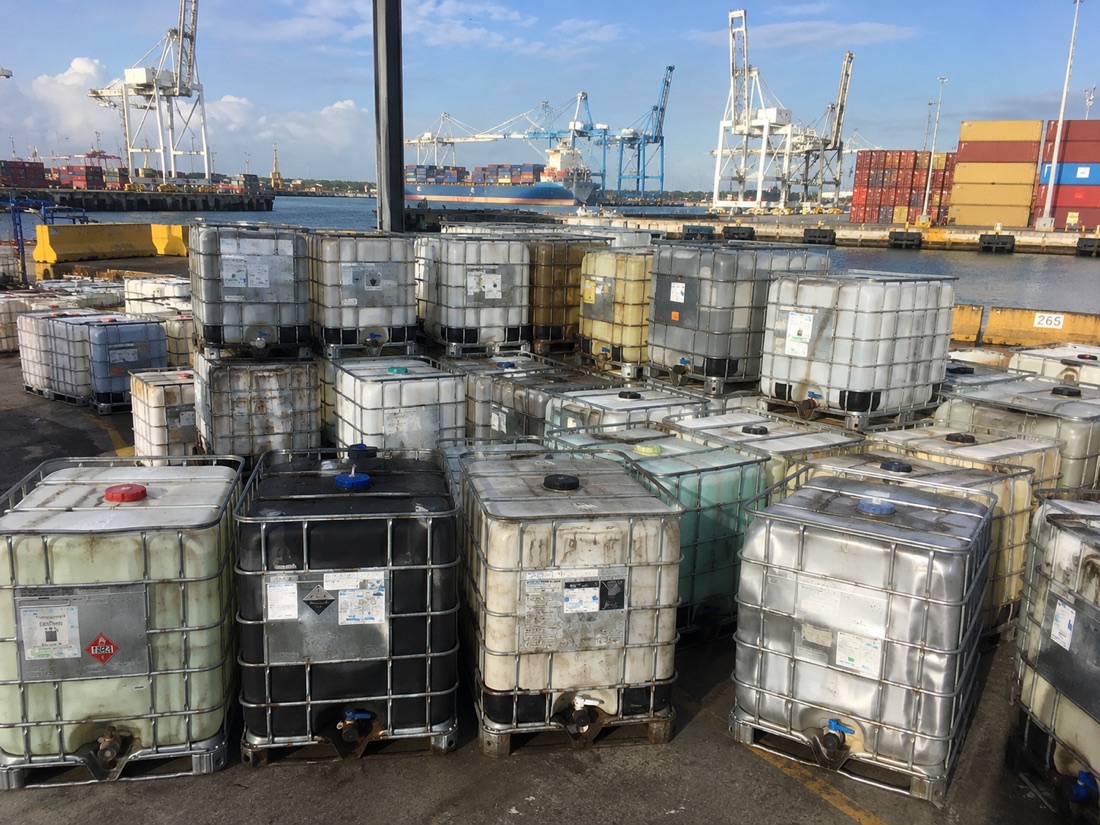
Bulk lots moving coast to coast
Quality
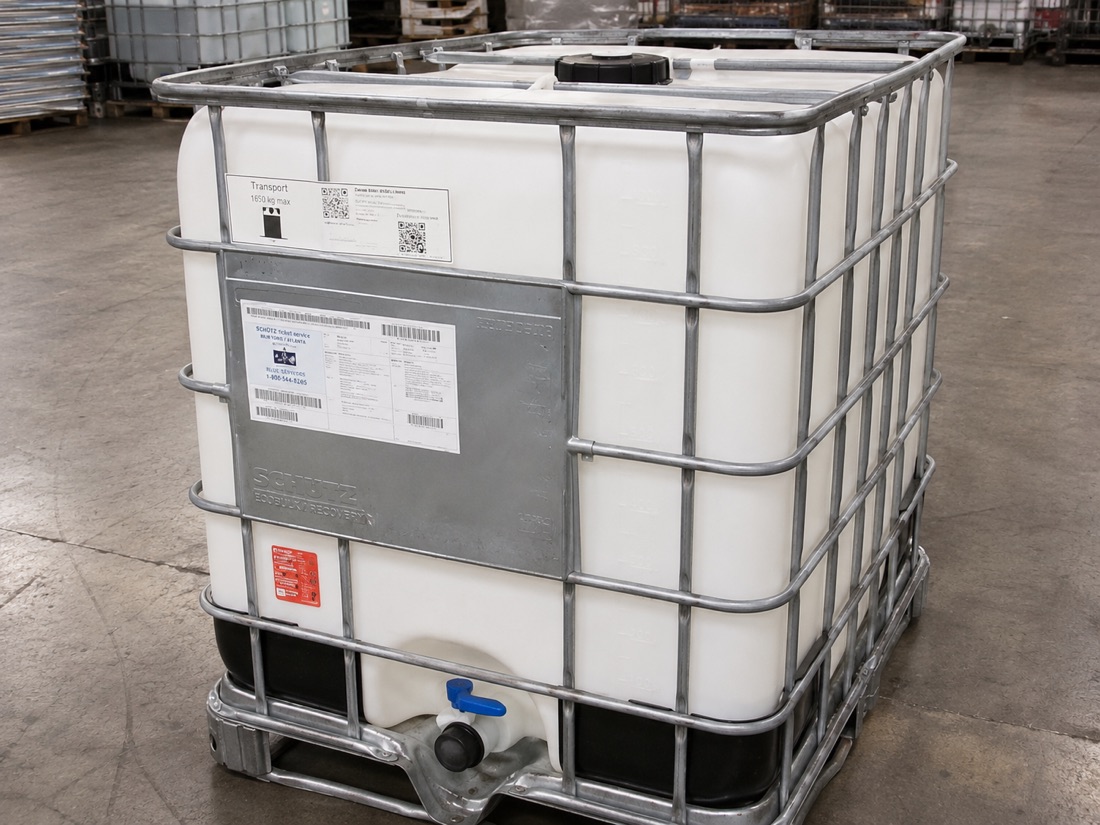
A single composite IBC, inspected and cleared for reuse