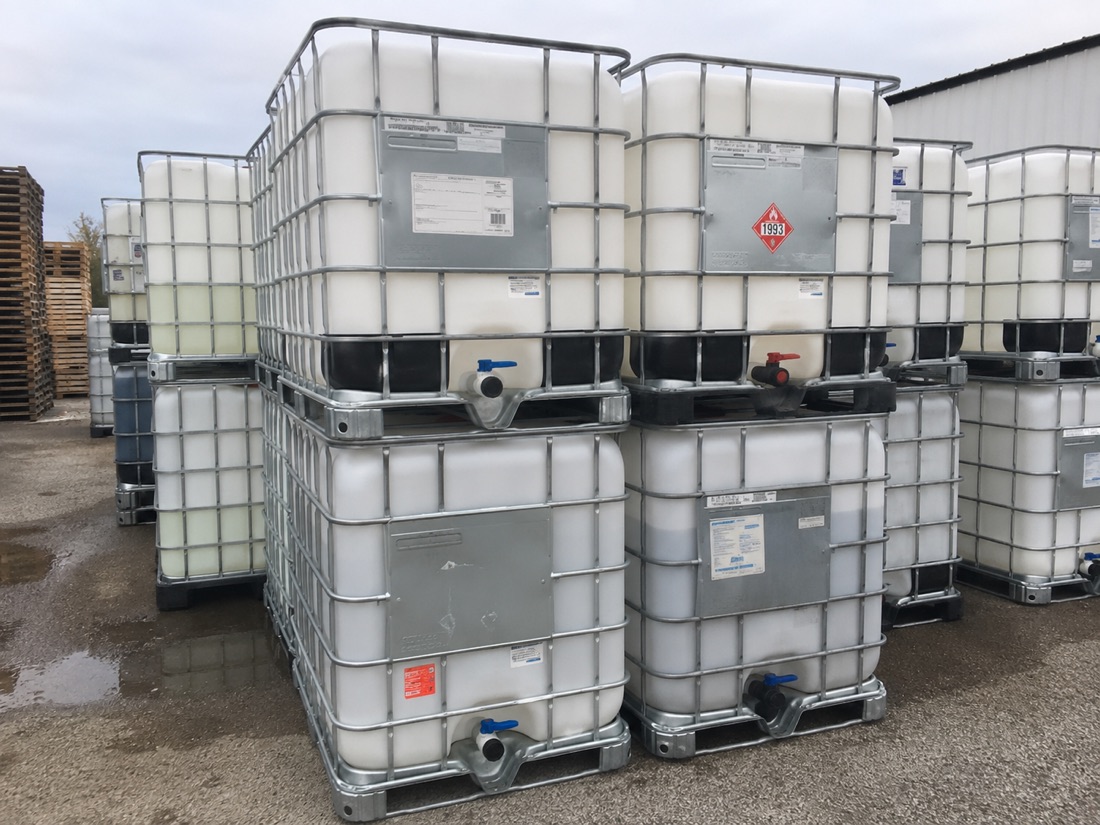
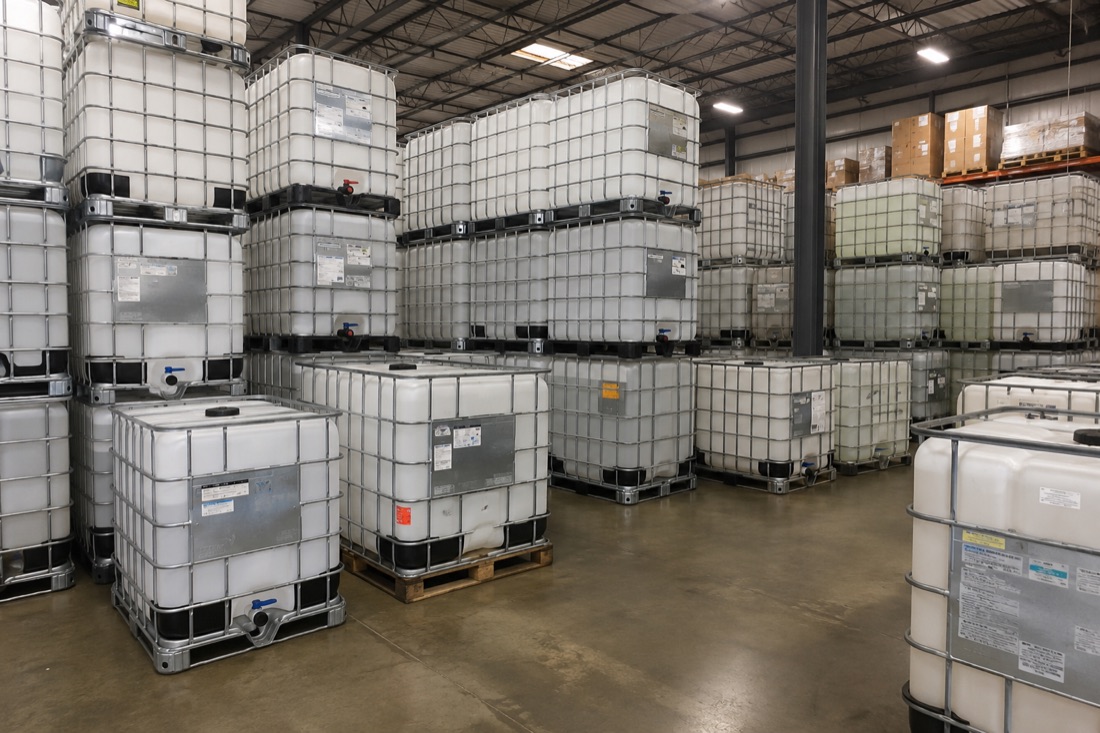
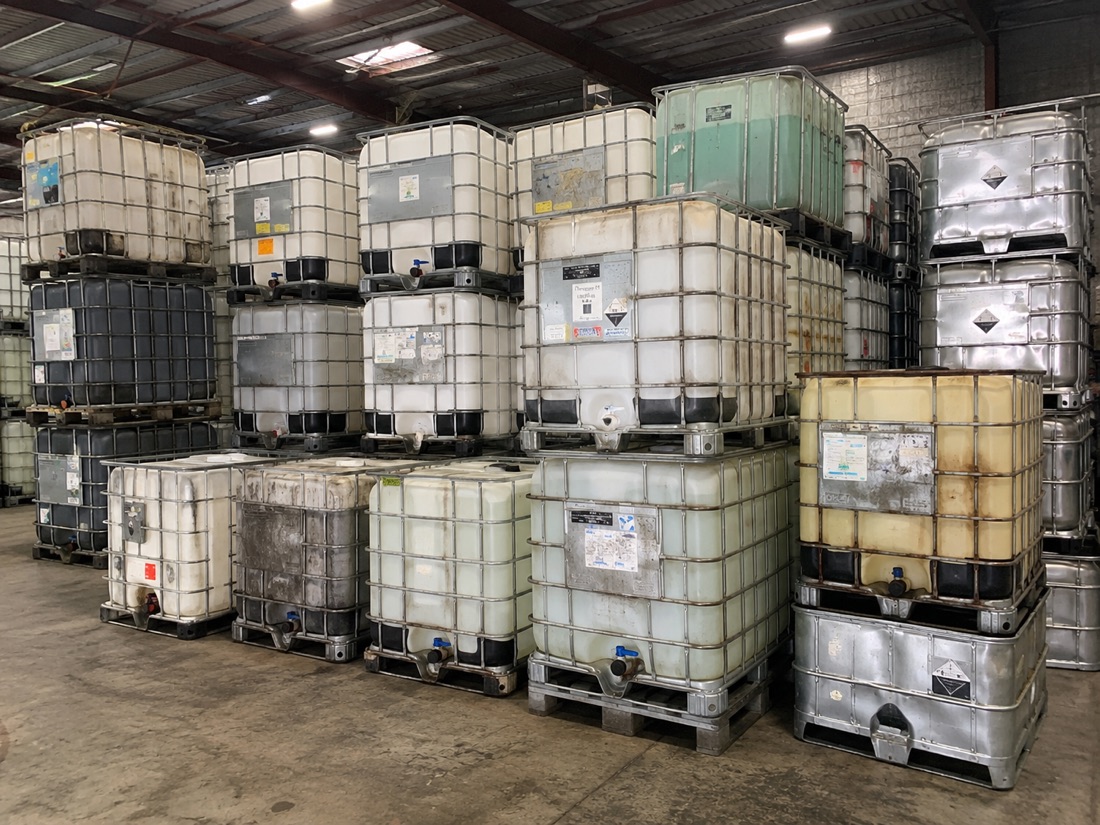
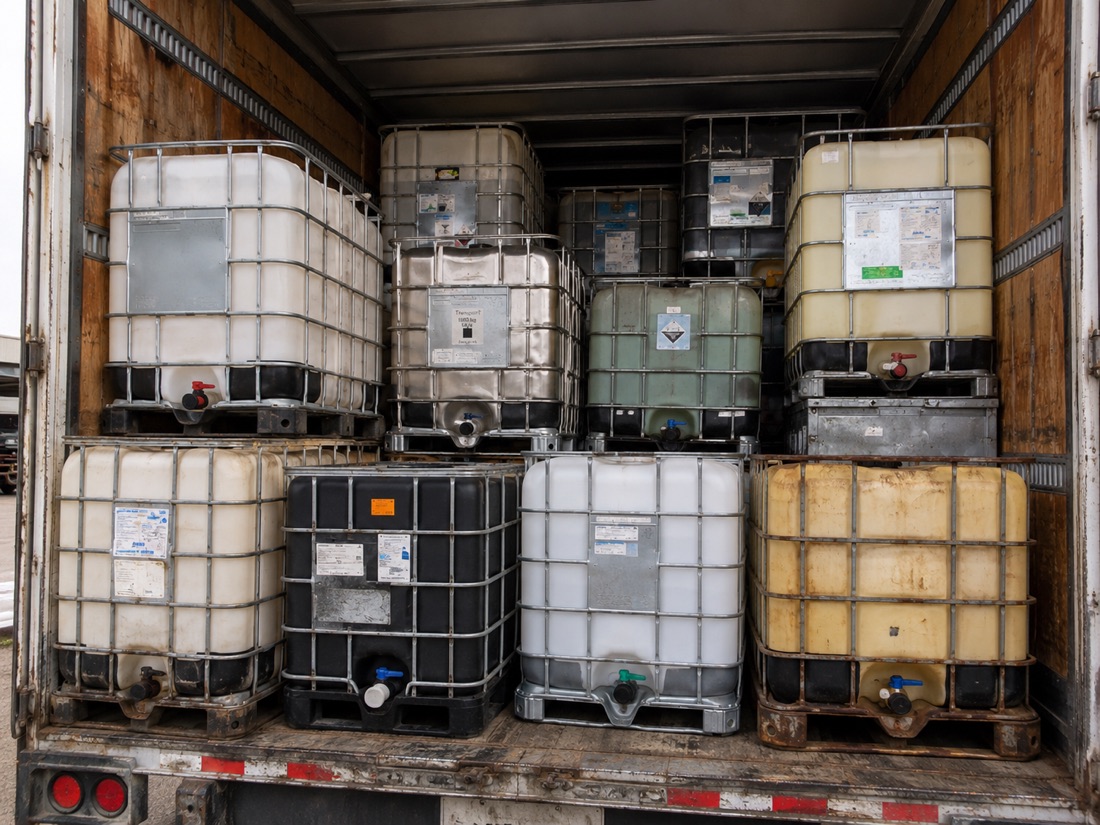
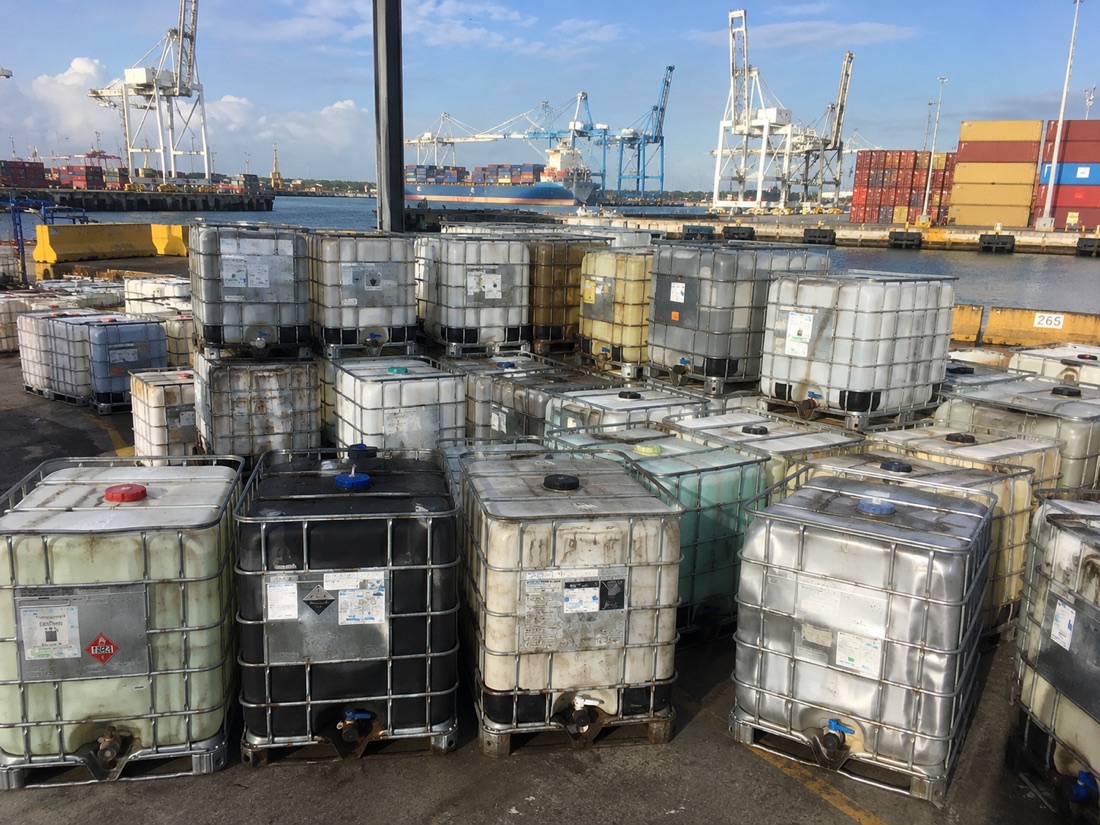
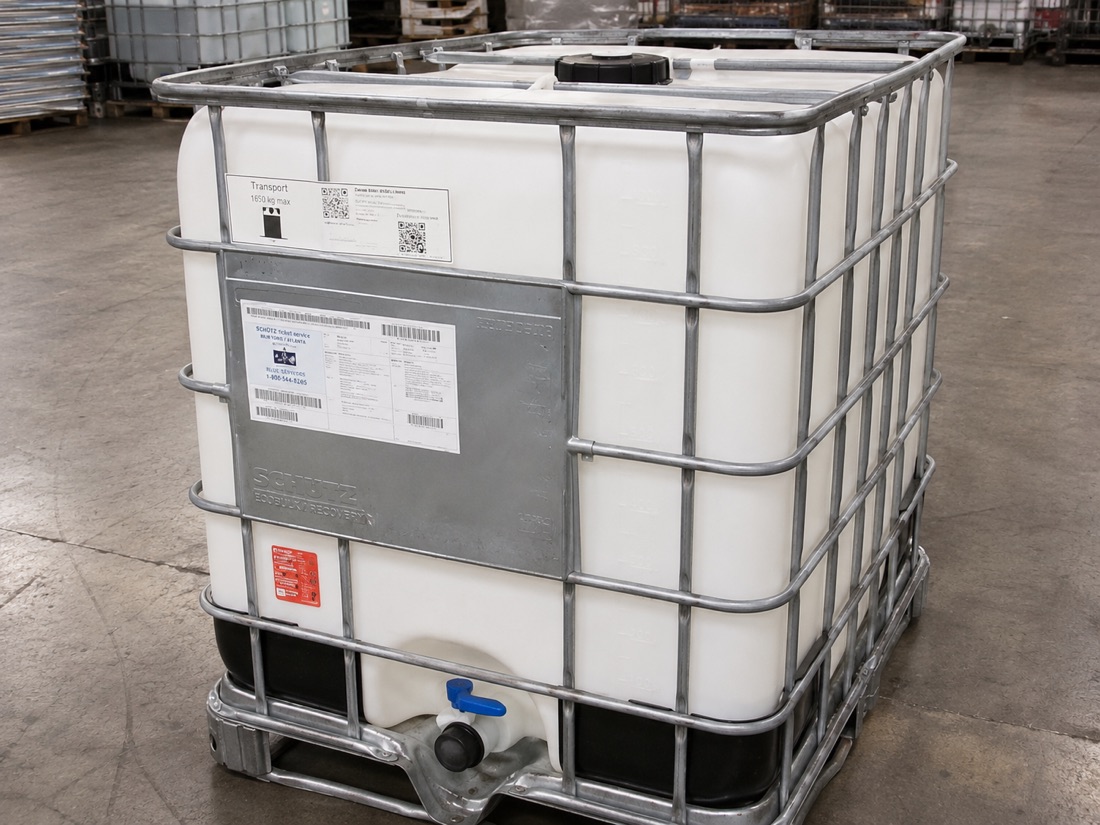
Nationwide IBC tote shipping.
How we move totes coast to coast: the regional lanes we run, realistic transit-time windows, the freight class IBC totes fall under, ZIP-based quoting, and how consolidation cuts both cost and carbon. Everything you need before you book a load.
Quote a nationwide lane
Origin and destination ZIP plus tote count — that's all we need to price and time your load.
Where we run, and how long it takes.
Anchored out of Austin, TX, we ship to every ZIP in the contiguous 48. Transit windows below are typical door-to-door estimates for palletized freight; exact timing depends on lane, mode (LTL vs. FTL), and pickup readiness.
| Region | Primary lane / hub | Typical transit |
|---|---|---|
| Texas & South Central | Austin, TX (7000 Burleson Rd) | 1–2 days |
| Gulf & Southeast | Houston / Atlanta corridor | 2–3 days |
| Midwest | Dallas → Chicago lane | 2–4 days |
| Mountain & Southwest | Denver / Phoenix | 2–4 days |
| West Coast | CA / PNW | 3–5 days |
| Northeast & Mid-Atlantic | PA / NJ metro | 3–5 days |
Transit estimates are business days and exclude weekends and carrier holidays. Full-truckload moves are often a day faster than LTL on the same lane because they skip terminal handling.
How IBC totes get classified.
LTL freight is priced by NMFC class, which is driven mostly by density — weight per cubic foot. An empty caged composite IBC is bulky and light: it occupies a full pallet footprint but weighs little, so empties carry a higher freight class (they cube out). A tote shipped full of product is far denser and classes lower.
- Empty totes: low density → higher class, space-driven pricing
- Full totes: high density → lower class, weight-driven pricing
- FTL: class-agnostic — you pay for the trailer, not the class
We handle classification on the BOL so you don't have to guess. For bulky empty moves, truckload or consolidation usually beats classed LTL.
Empty cubes out, full weighs out.
If you're moving empty totes in volume, floor space is the constraint — think trailer footprint, not scale weight.
If you're moving full totes, weight limits and axle distribution govern the load long before you run out of space.
Two ZIPs and a count. That's the quote.
Origin & destination
We rate the lane between your pickup ZIP and delivery ZIP — the single biggest driver of freight cost.
Count & state
Tote count and whether they're full or empty set the mode (LTL vs. FTL) and how the load cubes.
One landed price
We quote totes and freight together so you approve a single number — no separate shipping surprise.
Fuller trucks, lower cost, less carbon.
Half-empty trucks are the enemy of both price and planet. We consolidate wherever we can: pairing an outbound delivery with a nearby empties pickup so the same truck earns both ways, and batching smaller orders along a shared lane. A fuller trailer means a lower per-tote rate for you and fewer truck-miles per tote reused — the circular win shows up on the freight bill, too.
Size it, buy it, ship it.
Sizes & footprints
Dimensions and pallet footprints that drive how totes load and cube on a trailer.
Compare sizes →Buy totes
Reconditioned, new, and food-grade stock delivered nationwide by the pallet or truckload.
Get a quote →The carbon case
How reuse and fuller trucks compound into a smaller footprint per tote.
See the impact →The six levers behind every freight number.
Two shipments on the same lane can quote very differently. These are the factors that move both the price and the transit window — worth knowing before you book.
| Lever | Effect on cost / time |
|---|---|
| Lane distance | The single biggest cost driver; longer lanes cost more and take longer |
| Mode (LTL vs. FTL) | FTL costs more total but less per tote at volume, and is often a day faster |
| Full vs. empty | Empties cube out on space and class higher; full totes weigh out and class lower |
| Count | More totes tip a load from LTL to FTL, dropping per-tote rate |
| Access & accessorials | Liftgate, limited-access, or residential stops add LTL fees |
| Consolidation | Riding a shared or return lane lowers rate and carbon per tote |
We factor all six on your quote so you approve one landed price. See how loads cube on the transport & logistics page.
Why direction of travel changes the physics.
The same tote ships completely differently depending on whether it's carrying product. It's the core reason outbound deliveries and empties returns are priced on different logic — and why pairing them is so efficient.
Empty totes
- ~120–165 lbs each — light for their size
- Low density → higher LTL class
- Cube out: floor space is the limit
- ~40–45 fill a 53' van by footprint
Full totes
- ~2,300+ lbs each loaded with water
- High density → lower LTL class
- Weigh out: axle limits govern the load
- Far fewer per trailer before max gross weight
Deliver full, return empty
A truck delivering full totes to you has floor space freeing up as it's unloaded. Loading your empties for the return leg uses a trip that would otherwise run light or deadhead.
That's consolidation at its simplest — and it's why buying and selling on one order beats two separate freight bills.
Where the lanes run out of Austin.
Anchored at 7000 Burleson Rd in Austin, TX, our lanes radiate across the lower 48. Here's the shape of that coverage as a written map — the nearer the hub, the tighter the transit window.
Texas & South Central
Austin, San Antonio, Houston, DFW, Oklahoma, and the immediate corridor — our fastest, most flexible lanes.
Southeast & Midwest
The Gulf and Atlanta corridor plus the Dallas→Chicago lane and Mountain/Southwest metros.
Coasts
California, the Pacific Northwest, and the Northeast / Mid-Atlantic metros around PA and NJ.
Not on a listed metro? We still quote it — nearly every lower-48 ZIP sits on or near one of these lanes. Alaska and Hawaii fall outside our standard lower-48 service.
Answers on lanes, class, and transit.
How long does cross-country tote shipping take?
What freight class are IBC totes?
How is a nationwide shipment quoted?
Do you ship to all 50 states?
How does consolidation save money?
Ship totes anywhere in the lower 48.
Send two ZIPs and a count. We'll quote the lane, estimate transit, and consolidate where we can — within one business day.