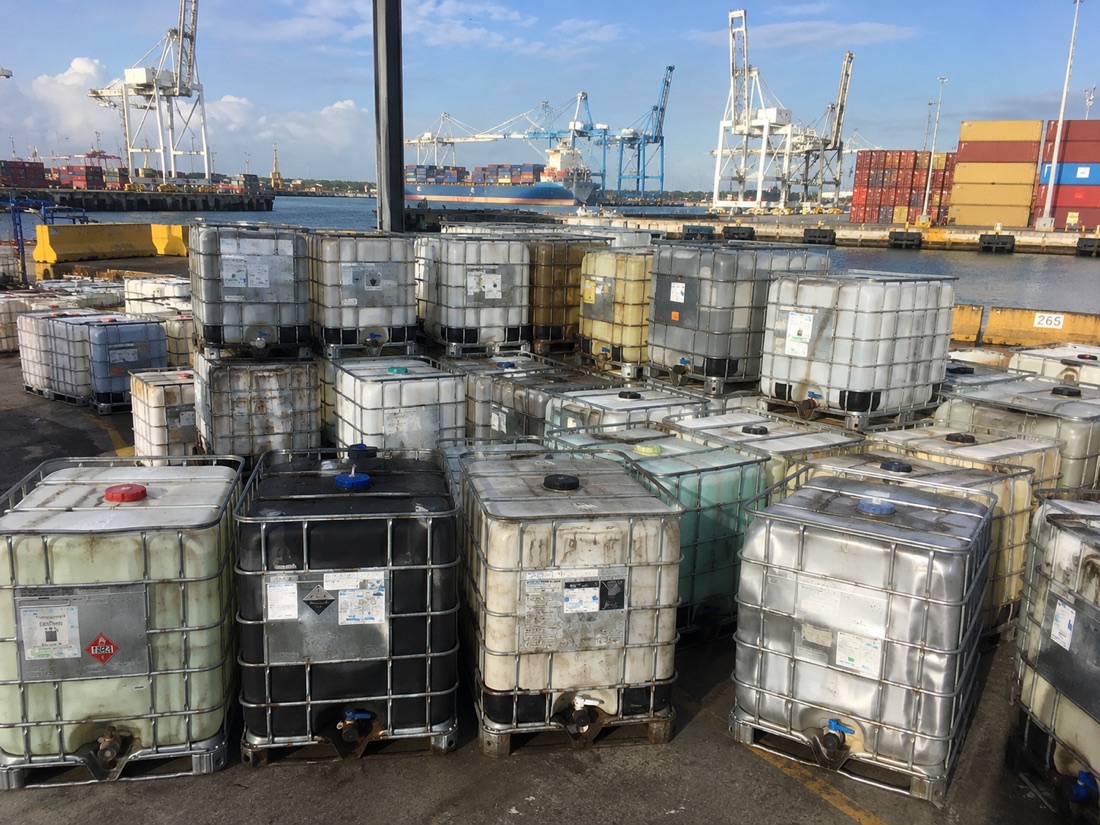
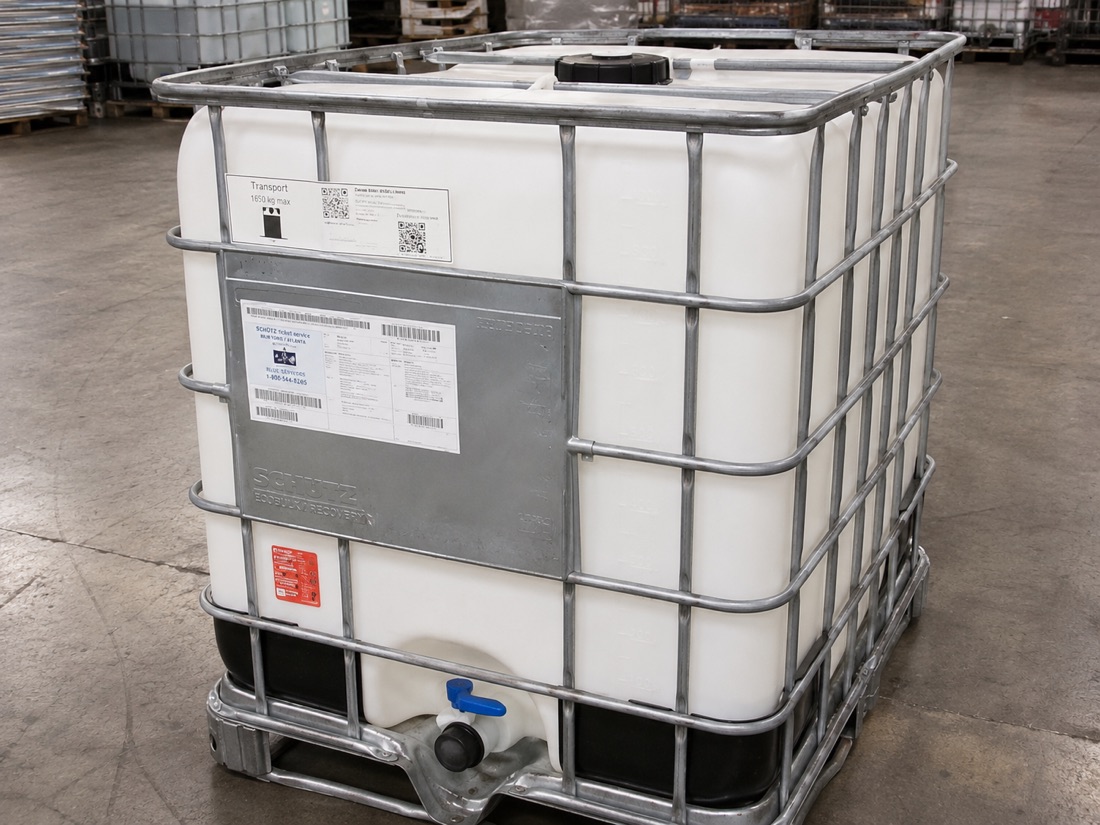
The most common tote failure I see in winter is also the most preventable. Someone leaves a full container of water or water-based product outside, a hard freeze rolls through, and the ice expands with nowhere to go. The result is a split bottle, a cracked valve, or a burst discharge line. Water expands roughly nine percent as it freezes, and a sealed tote cannot absorb that. Here is how to get every unit through the cold intact.
Understand what actually breaks
Not every part of a tote fails the same way, and knowing the weak points tells you where to focus.
- The discharge valve is usually the first casualty. It holds a plug of water in an exposed plastic body with little room to flex, so it cracks before the bottle does.
- Plumbing and hose bibs attached to the valve freeze even faster because they are thin and fully exposed.
- The bottle itself can split along a seam or wall if it is full and freezes solid.
- The cap and gasket rarely fail from freezing but can trap pressure that stresses the bottle.
The valve almost always goes before the bottle. If you protect one thing, protect the outlet.
The three strategies
There are really only three ways to protect a tote in winter, and most operations use a combination.
Strategy one: drain it
The simplest, cheapest, and most reliable approach. If you do not need the liquid over winter, empty the tote, open the valve, and let it sit dry. Ice cannot crack an empty container. Leave the valve slightly open so any residual moisture that does freeze has an escape path rather than building pressure.
Strategy two: leave headroom
If you must keep liquid in the tote, do not fill it to the top. Water expands as it freezes, and empty headspace gives the ice somewhere to go. Leaving the top ten to fifteen percent empty dramatically reduces the chance of a split bottle, though it will not save an exposed valve.
Strategy three: insulate and heat
For product you cannot drain and must keep liquid, add insulation and, if needed, heat.
- Insulated tote jackets wrap the bottle and slow heat loss.
- Tank heaters or heat blankets rated for IBCs keep the contents above freezing.
- Heat tape on the valve and any plumbing protects the parts that freeze first.
- A simple enclosure or moving the tote into a shed or garage often does the job in milder climates.
A pre-winter checklist
Run this before the first hard freeze, not during it.
| Task | Why |
|---|---|
| Drain totes you do not need | Empty cannot crack |
| Leave headroom in ones you keep | Room for ice expansion |
| Disconnect and drain external plumbing | Thin lines freeze first |
| Wrap or heat the valve | Most common failure point |
| Move critical totes under cover | Cheapest insulation there is |
| Inspect for existing cracks | Cold widens what is already weak |
Regional reality check
The right plan depends entirely on where you are. Here in Austin we get occasional hard freezes rather than a sustained deep winter, so for many local operations the answer is simply to drain non-essential totes and wrap the valves on the ones that stay in service. A tank heater is overkill for a climate that freezes a handful of nights a year but essential in the upper Midwest.
Match the effort to the risk. A few freeze nights call for draining and valve protection. A months-long deep freeze calls for real insulation and active heating.
Thawing safely
If a tote does freeze, thaw it slowly. Do not take a torch or high heat to a plastic bottle; you will warp or melt it before the ice at the center moves. Move the tote somewhere warm and let it come up gradually, and inspect carefully for cracks before you trust it with product again. A tote that froze while full should be pressure-checked before reuse, because a hairline split may not show until it is under load.
When a tote does not survive
Sometimes you inherit a tote that already cracked over a hard winter. A split bottle is usually the end of that container's pressurized life, but the steel cage and pallet are almost always still good and should never hit a landfill. Our recycling program recovers the material and keeps the cage in circulation. And if you need to replace a freeze-damaged unit, reconditioned totes are the economical route back to service.
For a broader look at keeping totes sound year-round, see our safety resource, and reach out through contact if you want help sizing insulation or heat for a specific fleet. Winter damage is one of the few tote failures that is almost entirely a planning problem, so plan for it.